

A write-up of seven lessons learned and realizations had throughout the past seven months of full-time budget backpacking through India and Pakistan.
WHEW is time a funny thing. Seven months ago, I was a bundle of nerves and excitement, overloaded with my far too heavy backpack, visas, and general idea of where I was going- but unsure exactly how everything would pan out. I mean you can’t really predict how an adventure is going to go, can you?
Hours spent in classrooms doing more Insta-scrolling and blog reading than paying attention had finally come to an abrupt halt and there we were, wide-eyed, energized and thoroughly ready for everything and anything that was about to be thrown at us.
After nearly a year of pouring over the best routes and best travel jobs to sustain life on the road, we were finally on it. And boy did it move fast.
And throw. it. did! But more often than not, in the best ways possible.
We (almost) made it to the start of the Ganges River, were overwhelmed with love from the most hospitable people in the world, hiked and chillaxed to the max in the fairytale villages of Parvati, explored unexplored villages in mystical Swat, spent over a month exploring Lahore, and unexpectedly hitchhiked our way through Yarkhun Valley, a place I had never even come across once in all that research- and that’s not even a tenth of it y’all.
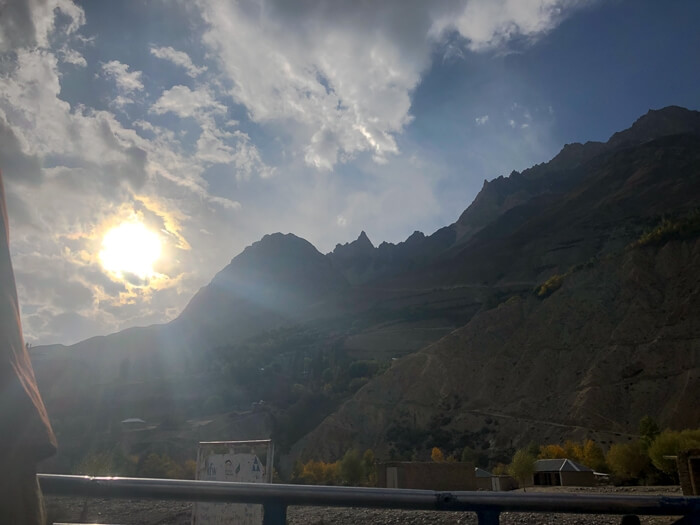
A bajillion cups of chai, what feels like a million new friends and faces, history’s most beautiful structures, natures greatest works of art, culinary’s greatest creations— all accessed overland through elderly vehicles stuffed to the brim, hanging out the back of a pick-up truck as it coasted mere inches from the side of a haphazardly cut cliff, long haul trains, and the longest (worst) bus ride ( yes, Gilgit- Islamabad I’m thinking of you here) in the world.
It’s safe to say we’ve seen (and done) a lot in the past 7 months of this intentional detour- and don’t for a second think this round-up means were done because if the past 7 months have taught me anything as a traveler, it’s that there’s so, so, so much more to see.
But anyhow, let’s discuss what we’ve seen so far on this crazy detour through the less crowded, least visited and as I see it, most beautiful places in this wild, wild world.
Our adventure has shown us a lot, given us a lot, but most importantly it’s taught us a whole lot. Here’s seven lessons/realizations I’ve learned/ had from the past 7 months on the road:
1. Less is more
Before setting off, while we were semi-planning… er, well trying to plan and budget and what not, many countries were on the list. Of course Pakistan and India, but also Bangladesh, Myanmar, Nepal and the ‘Stans.
But thus far, we’ve only made it to the first two. And I wouldn’t change a thing. I still hope to make it to all of the above, but the past seven months have cemented my love for slow travel.
Travel that actually allows me to truly get to know a place rather than just rush from site-to-site or valley-to-valley.
Even in the two countries we DID visit, there’s SO much more we could have seen if we had been on the type of schedule we traveled on back in 2017 during our first backpacking trip to Europe.
Those days saw us jetting off to a new place literally every 2-3 days and while we did tick off a lot of boxes, we didn’t really get to know anywhere.

This year was the complete opposite. We spent well over a month in Lahore alone, and ironically STILL didn’t see all of the major sites. During our second round in India, we spent a whole week in the idyllic beach town of Guhagar, a place most people only popped into for a weekend.
Staying put while traveling not only allows you to dig deeper, but also makes travel feel more like living in a place rather than just visiting. I love that, and can’t see myself deviating from it.
2. A 60L backpack is WAY too much
When I purchased my Osprey 60L hiking backpack and literally filled it to the brim with clothes and other assorted items, I almost couldn’t close it. Yes, mere hours before our flight out I was struggling to close my bag.
And it wasn’t long before I realized I was WAY too overloaded and definitely did NOT know how to pack light.
On day 2 of being in Amsterdam (we flew to Amsterdam for a few days before starting our South Asia journey), I was forced to mail our tent, sleeping bag and sleeping mat back home because y’all.. it was just NOT gonna’ work.

As we moved along, it became clear that even with all that gear gone I was still carrying WAY too much… like WAY too much! I thought I was packing light with only 3 large packing cubes, but once I reached Pakistan and realized the shalwar khameez was all I needed, AND that said shalwar khameez were so easy to wash and dry… it became apparent that I had majorly overpacked, and Charles felt the same way about his lot.
Luckily our friend Waqas let us leave some of our unnecessary things at his place while we explored Northern Pakistan, but that load was painfully felt again when we exited back to India and sadly had to saddle back up with everything.

Needless to say, I have a lot of room to improve as far as packing light is concerned. My current plan is to ONLY pack my three shalwar fits, ONE pair of sweats, less underwear (I brought like 30), TWO tank tops instead of five and ONE long-sleeve shirt instead of three.
And thas’ it. If you’re reading this and planning to head out on your own backpacking trip, heed my advice: the fewer clothes the better!
3. Dictionaries, dictionaries, dictionaries
It is true that many, many people in both Pakistan and India speak English, which is a major privilege for us westerners. But there’s also a major disconnect when you don’t speak someone’s mother tongue, and in my favorite types of places (remote areas) the amount of English spoken sometimes whittles away to none.
Often such places don’t have cell service, so translation apps were out of the question and we had to rely on a few common words and hand signals. And don’t get me wrong, language is not needed to form genuine connections.
But as someone who loves to get to know people and hear their stories, it’s frustrating being a dumb foreigner unable to mutter more than infant level Urdu or Hindi.

What’s more is that many people only speak their regional language, such as Khowar in Chitral for example. In those cases, even an Urdu-English dictionary wouldn’t have been enough!
SO not only have I learned to have one of those handy, but also to acquire resources for Pashto, Gowri, Khowar, and Wakhi to hopefully be able to form deeper connections with folks in the future.
While Hindi is available on the popular app Duolingo, keep in mind that Urdu is NOT. If you’re planning to head to South Asia, don’t forget your dictionaries/ phrasebooks like we did!
4. Offbeat travel is best, but some tourist spots are worth the visit
If y’all have poked around even a bit on here, you already know I’m into offbeat travel. Places with tons of tourists irk me, and often lack the authenticity and connection with people I crave.
And not to mention, they’re often filled with scammers and are vastly overpriced compared to the places I randomly discover via word of mouth or a map.
But that’s not to say that all touristy places are horrible. Despite it being pretty opposite of say Yarkhun Valley, Parvati Valley in India’s popular Himachal Pradesh state held a special place in our travels AND led to some of our most memorable friendships with fellow backpackers.

Parvati was busy, but far enough away from major cities and good roads so that most villages and hikes we embarked were semi-empty.
Plus, the incredible (though pricey) food, picture-perfect mountain greenery and ahem… other things (cough hashish cough) made it worth the re-visit.
Jaipur, India also surprised us. Though we missed out on more “authentic” places in Rajasthan like Jaisalmer, Jaipur still gave us all the feels we were looking for!
Being a highlight of most “basic” Golden Triangle tours I was worried that stopping over there at all would be a mistake, especially seeing as it was our first destination after leaving Pakistan.

And though we did see more fellow tourists than we had seen in the prior 106 days, it was incredibly easy to stray away from Jaipur’s beaten track in the form of day-trips and scarcely climbed viewpoints.
Though truly offbeat destinations are definitely my hard preference, it was nice to see that beauty and worthwhile could be found even in the most popular of locales.
5. Traveling during national/ religious holidays? A mistake!
Though we thought ourselves relatively experienced travelers 7 months ago, (LOL) failing to thoroughly research domestic holiday travel trends led us to more than one error in both India AND once again in Pakistan.
Our first mishap occurred in Gangotri, during week one of our adventure. It was late May, and unbeknownst to us, literally the PEAK point of a religious pilgrimage to the village.
Our sights had been set on the Gaumukh trek– a moderately hard hike to the start of the Ganges River in Uttarakhand.

Though the trekking path itself was fairly unpopulated, the town was a MESS.
Thousands of people crammed onto the path from the main road to the temple, all cascading out of literally hundreds upon hundreds of commercial buses and vehicles lined up for miles on the steep mountain cliffs.
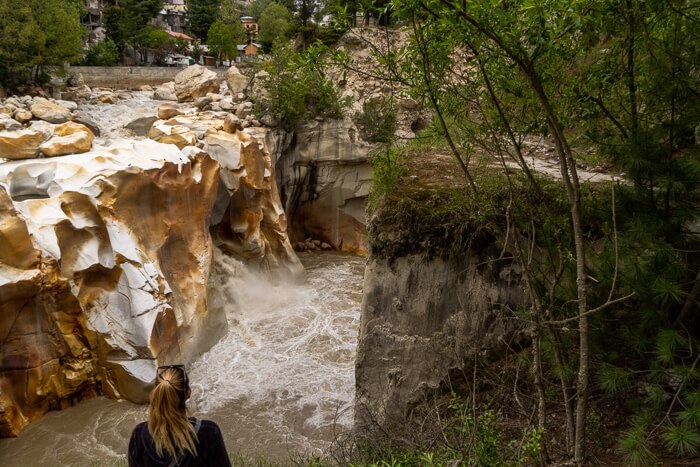
Hotels and food were subpar and made sticking to our budget a challenge!
Though the views along the trek and in the forests surrounding the village made it semi-worth it, looking back now- the commercialization of the town and hordes of people made what might have been a beautiful place during off-season quite the opposite.
Our poor timing—we soon learned that May-June is summer vacation time in India— also led to us almost being stranded in Shimla when a Couchsurfing host bailed last minute… whilst every hotel in a 20-mile radius was booked out (shout-out to Yash for literally saving us from a long night of misery).

This also led to us encountering significantly more people than we imagined (and many “we’re full” responses from hotel owners) throughout remote AF Spiti Valley.
Though you’d think we would have learned from all that, in Pakistan several months later, we happened to reach Kalam in Swat Valley during the Ashura long weekend- and once again found ourselves in a completely full town, lucky to have discovered an affordable room amongst the madness.
Lessons learned I guess? Though sometimes traveling during holidays/festivals is unavoidable being more mindful of the calendar could have saved us some stress fo’sho.
6. Ripped bills don’t count and ATM’s can be elusive… and/or broken
We found ourselves without even one rupee note more times than I’d like to admit… and it was definitely my fault. (Sorry Charles!) But first, a magical story of sorts.
It was absolutely freezing in Spiti’s Mud, a small, extremely remote village that was deep in a side valley of Pin National Park.
Not only did Mud not have any ATMs (duh) but it also didn’t have a lick of cell phone service… and therefore no other means of getting cash from a card swiper.

But we weren’t out of cash… we were just in possession of a RIPPED 2000 rupee note, something we quickly learned is the equivalent to being without cash, since absolutely no one would accept it.
Luckily, a guesthouse owner was kind enough to “lend” us 2000 rupees, provided we transfer it back to his account when we returned to Spiti’s “capital,” Kaza.
Relieved to be free from cashless-stress, we made our way back to a small eatery to pay for our previous meal with our now intact bills.
I still couldn’t believe this ripped note debacle was really a thing, and felt compelled to ask some other Indian travelers sitting nearby what was really up.
Almost as soon as the words poured out of my mouth, one of the guys in the group of four exclaimed: “She’s a banker!”
The lady of reference smiled, pulled out four 500 rupee notes and accepted our ripped bill as if it were the most expected thing in the world out here in the middle of nowhere.
She explained that it wouldn’t be a problem for her to exchange it when she got back to work, and just like that— all of our monetary troubles magically disappeared.

Though you might have assumed we would have learned from all that, bad habits die hard… like not taking out enough cash and then finding ourselves hours away from any ATMs or money exchanges.
If Charles hadn’t been smart enough to bring USD, we would have had to re-do some dreadful bus journeys on more than one occasion. So even if you think you won’t need it, bring cash from your home country- period!
7. Bottom line: South Asia, you’ve got me hooked
I guess this really sums it all up, huh? When I started this blog around the time we left, I was already in love with this region (at that time having only visited sliver of India) after a measly 10 days spent there.

Now that it’s been more than 200, I can say with absolute certainty that this is it.
Sure there’s 6 other continents and hundreds of other regions throughout the world, but it’s South Asia- from Pakistan to Sri Lanka– with its incredible people, untouched landscapes, centuries-old traditions, lively cultures, half-built mountain roads that simultaneously drop jaws and stomachs, and luscious foods… that has me set on coming back for more and more and more.
A lifetime wouldn’t be enough to truly see it all BUT we can sure give it our best shot, am I right?
If you’ve made it this far- thank you for joining me on this rehash of the past 7 months— well a smidge of it, that is! Being back in the US for some family time and holidays is wonderful, but trust me, future plans are being cooked up y’all.

In the meantime, here’s a huge thank you to everyone who has made the past 7 months some of the best of my entire life- from strangers who invited us to feasts after seeing us wandering around, to friends who became closer than those we’ve known for years and all those who we crossed paths with in between, saying it’s been epic is a major understatement.
As those in PK would say InshaAllah to 7 months more!

Samantha is the founder of Intentional Detours. Originally from the USA, she’s been backpacking the world since 2017, and is passionate about slow, adventure travel that puts local communities first. She has visited 19 countries and has been living in the Karakoram Mountains of Asia’s Hunza Valley since 2021. She’s super passionate about helping people get off the beaten path anywhere (on a budget of course), and her travel writing has been published in the likes of BBC Travel, CNBC, Business Insider, and more.


What a wonderfully written post! It’s true, researching a place certainly helps in advance, but you never know what will happen when you experience it. I love that you decided to slow travel and really live, experience, and to get to know the places, the culture and the people. It’s not about checking boxes. I hope you’re able to continue traveling that way.
I love this post. So many of these things are true about all kinds of travel. Overpacking is one of my biggest issues so I know I need to get better at that. But also just going with the flow and accepting things that change your “plan” as you go. Great insight
During one of my recent backpacking trips to Spiti Valley in India, I learnt that going offbeat is indeed one of the best things to do every once in a while. All the things you said have resonated with me :)
Yes! I loved Spiti Valley… some touristy places are worth it at least once, but offbeat places really are something special.. and usually empty!
What a trip you have made! I’ve been traveling for the past three years now and you give so many great tips. It’s so easy to take too much stuff with you right?! I downgraded my backpack on the way and left some things behind at different places. To many more beautiful trips, because yes the more you travel the more you want to see.
Yes I’m so glad I realized this relatively early on! I’m definitely planning to a 40L I believe- hopefully that will be a big difference! Thanks so much Maartje, may you take some great trips this year as well!