

A pilgrim’s complete guide to embarking on the Gaumukh trek to the start of the Ganges River. Includes information on permits, how to get there, what to bring on the trek and where to stay in Gangotri.
Everyone from India knows what the Ganges is- the holy, sacred river of Hinduism that flows horizontally across several of India’s northern states, carrying with it ancient blessings and wisdom.
If you want to see the Ganges, your first thought might be to visit Haridwar, Varanasi or even Rishikesh, as all three are blessed by Ma Ganga’s flow and attract millions of visitors yearly.
And while you might have heard of the Valley of Flowers trek, heading to the source of the holy river might not be on your adventure’s itinerary.
But what about adding Gangotri… and the Gaumukh trek to your Uttarakhand trip?

Gangotri is a holy village perched well over 11,000 feet above sea level, way up north in the state of Uttarakhand.
The holy Gangotri temple attracts droves of pilgrims of all ages and from all states, as it is considered to be one of the four temples that must be visited in a Hindu’s lifetime.
Gaumukh Trek: The Ultimate Guide

But what is the Gaumukh Trek?
The Gaumukh trek begins in the small town of Gangotri. While Gangotri is a beautiful (and spiritual) place to visit just by itself- it carries with it yet another place- a place surreal to both Hindus and non-Hindus alike.
Located within Gangotri National park, which starts along the outskirts of the village, the Gaumukh Glacier is believed to be the exact start of the Mother Ganga river.
Gaumukh is mostly frozen, yet has parts that are clean enough to drink from without worry- a true gift to any Hindu or non-Hindu alike!
But how to get to this remote, icy place? Read on for all you need to know about embarking on the Gaumukh trek- perhaps one of the holiest journeys in all of India!

The Best Time for the Gaumukh Trek
Due to its high elevation of over 11,000 feet, Gangotri sees extreme cold and snow much of the year. The town and temple, and therefore the trek, only opens to visitors once all the snow has melted, the timing of which can vary each season.
In 2019, after an especially harsh winter, Gangotri opened its doors on May 11th, though in years past opening day had been in mid-April.

If you’re looking for the best Gangotri/Gaumukh weather, May and June will certainly deliver. But keep in mind that these months also commence Char Dham Yatra, a Hindu Pilgrimage that brings in tens of thousands of tourists.
Keep in mind that May and June also happen to be the peak of domestic mass tourism in general, as most schools are closed and many jobs give leave
We visited in May and while the trek wasn’t too crowded, the sardine feel of the town would have been better avoided.
If you’re looking to see Gangotri at its best, I’d recommend visiting around September-October- the weather should be clear, (perhaps a bit cold) and tourist numbers should be lowered- excellent!
Getting to Gangotri
To reach Gangotri you’ll first have to make your way to a town called Uttarkashi. While we did see some people heading straight to Gangotri from Rishikesh, because of its altitude, it’s best to stop for the night in Uttarkashi (the views there ain’t so bad either!) and then continue on the following morning.

How to get to Uttarkashi
Uttarkashi is a hill station around 4,000 feet above sea level. But how to reach? Your best bet is to take a government bus from Rishikesh’s government bus stand.
Why? Because direct government buses do not run from Haridwar.
As of May 2019, the only option from Haridwar appeared to be a private Volvo at 6am. So, better (and cheaper) to first make it to Rishikesh if possible.
From Rishikesh, government buses to Uttarkashi run every morning starting at 6am.
While no clear schedule was posted, but we were told that the last bus leaves around 11:30 am. Tickets cost 240 rupees each- try to arrive around an hour beforehand if you want a seat, as many people ended up having to stand for the 6-hour journey.
Where to stay in Uttarkashi
Uttarkashi is filled with many a guesthouse or hotel to choose from. We unintentionally visited during the highest of high seasons, and were still able to find a semi-decent room on the spot.
We stayed at Hotel Shiv Dev, where we paid 1000 rupees for a non-AC double.
It’s likely this would be less outside of high season. Most accommodations are located on or adjacent to Mall Road, which is Uttarkashi’s main bazaar- check out a few before deciding.
Click here to see all hotels in Uttarkashi- book ahead in high season!
Where to Eat in Uttarkashi
You definitely won’t go hungry here! Uttarkashi sure loves food, which is obvious from the gazillion shops, restaurants and food stalls all over town. I would definitely recommend the following for cheap, good eats for your stopover:
- TFH- The Food Habit- Looking for western style eats (and eggs!) but on a budget? TFH has your fave comfort foods for extremely affordable prices. Almost everything is under 100 rupees.
- Street food- incredible, cheap, and located right in the center of the main bazaar
- Ashoka Sweets- as a self-proclaimed Lassi fiend this was hands down the best one I’ve ever had. And they have all classic Indian sweets. Score!
- Unnamed Eatery to the left of Hotel Shiv Dev- Serving Biryani, Qorma and Naan for the cheap- this hole in the wall local eatery is filled with flavors from across the border.
How to Get to Gangotri From Uttarkashi
While one bus runs daily at 6am, the best way to get to Gangotri is by shared jeep. Shared jeeps leave starting early in the morning until around 1:30PM. During high season (May-June) a ride cost 230 rupees per person.
While we got lucky space-wise on the way up, jeeps can and will squeeze in way too many people (think 12 when the comfortable capacity is 8!)
Arrive early or wait for another jeep if you don’t want to be squished to death! Keep in mind that while the ride SHOULD take 4 hours, but can take up to 6 pending on traffic and other mountain road delays.
Where to Stay in Gangotri
Gangotri’s main (and only) road is filled with dozens of guesthouses to choose from. But where to stay? In high season, many places are known to overcharge, and booking online isn’t a thing- so check these out when you arrive:
- Hotel Bhagirathi– For 600 rupees, this was the best price we could find in May. Don’t expect luxury (or hot water), but for a night or two this will do!
- GVMN Tourist Resthouse- A government-sponsored guesthouse, GVMN will be a bit nicer than above but expect to pay 1000 rupees during high season
- Hotel Manisha- Close to the entrance of the village, Hotel Manisha is a good pick, but prices can fluctuate. Expect to pay between 800-1000 rupees depending on when you come

What to eat in Gangotri
Gangotri isn’t a foodie spot by any means- its filled with tons of dhaba type restaurants all serving up pretty much the same menu of Indian & Chinese dishes- but there is one that’s definitely worth a stop!
If you’re walking into the down, look for an unnamed hole in the wall style shop with aqua green paint. Always full, the price to quality ratio here is excellent.
Things to do in Gangotri
There’s actually quite a bit to see in Gangotri besides going to Gaumukh- the nature around the town is sweet and deserves to be checked out! Have a day or two to spare? Here’s what to do:
Visit the Gangotri Temple
The Mandir is believed to be one of four Hindu’s must visit if they want to attain Moksha. (eternal life/ end of reincarnation) It sits alongside the Bhagirathi/Ganges River and is no doubt a spiritual experience worth having!

Take a hike to Pondav Cave
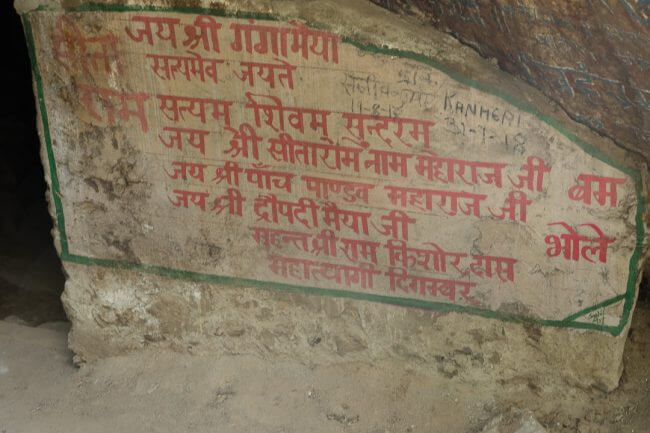
This ancient cave also has spiritual significance to Hindus and is home to a specific baba- which we were told changes every 10 years! The path leading to it will hit you with views that are all kinds of epic AND provide some much needed solitude from the bustling town.
How to Get the Gaumukh Trek Permit
Both Indians and Foreigners alike need to get themselves a permit to enter Gangotri National park before starting the Gaumukh trek, and they can be obtained at the Forestry Department Office.
Keep in mind that only 150 people can be allowed in the park on a given day, so it’s best to get your permit the day before you want to start the trek.
For whatever reason, the office only grants them between the hours of 8:00AM- 10:00AM and 5:00PM-7:00PM, including Sundays.

Permits for the Gaumukh trek cost 150 rupees for Indian Citizens and 600 rupees for foreigners (gotta love dual pricing)— permits are valid for 2 days. If you wish to stay in the park longer, you definitely can, but expect to pay 250 rupees per day for each one beyond those two.
What to bring on the Gaumukh Trek
This trek ain’t no joke- be sure to bring any of the best hiking gifts you may have received (or bought) with you!
Most guesthouses will allow you to keep your large backpacks with them. I’d definitely recommend doing so as the trek is much easier without added weight—a daypack will do.

When packing, don’t underestimate how cold it can get up there! While the days were quite hot from my experience in late May, nights got bitter cold real quick. Here’s what to bring:
Snacks on snacks on snacks. If you go all the way to Gaumukh it can be hours before you reach the rest stop. Load up before!
Altitude sickness/ breathing medication just in case
Water and something to purify water from rivers/ waterfalls
Warm jacket with a hood
Gloves (only needed at night in May)
Trekking poles
Sleeping bag liner if you have one
Portable charger
Sunglasses
Sunscreen (deff learned the hard way on this one)
Gaumukh Trek In’s & Outs
The trek starts just after the Gangotri temple, up a (damned steep) stairwell. Walk for about 1 kilometer before you’ll come to another forest park office, where you’ll be asked to pay a 500 rupee plastic deposit if you’re carrying any.
This actually seems to be working- this trek was surprisingly trash free!

While the trek wasn’t a killer, it certainly wasn’t that easy for the average person. The Gangotri to Gaumukh trek distance is approximately 21 km/ 13 miles.
Though the path is well-marked, slippery rock-leaden footpaths and many a’ incline definitely make a trekking pole useful to have. It’s a major key to have enough water (or a way to make your own with a filter.)

The Gaumukh trek is usually done in 2 days, though it can take longer depending on your plans.
On day one, most people trek to Bhojbasa and stay the night before continuing on to Gaumukh the next morning and headin’ back to Gangotri thereafter.

It is also possible to stop for the night at Chirbasa (located near the snacks dhaba) and then continue on to Bhojbasa on day two, but keep in mind that this will push your time in the park past two days.
Although I had done some pre-trip hiking fitness preparation, the elevation was no joke— it took both of us a bit over 6 hours to reach Bhojbasa from Gangotri with numerous stops along the way.
So if you want to reach your “base camp” safely before dark make sure to leave Gangotri no later than 10 am. The total distance between Gangotri and Bhojbasa is 13 km (8 miles).

The Gaumukh Trek altitude doesn’t play around and you shouldn’t either! Bhojbasa sits at around 3800 m (12,450 feet). I would highly recommend having some altitude sickness medication handy.
Once you reach Bhojbasa, you have two options as far accommodation goes- either the Lal Baba Ashram or GVMN Resthouse. (or your own tent- but remember, it’s damned cold!)
Lal Baba costs 350 rupees per person for a very basic- but warm- room. There aren’t any showers or regular toilets here- but they make up for it by serving delicious free food every morning and evening. Dinner is served at 7 PM, and breakfast at 6:30 AM.

GVMN Resthouse has slightly nicer amenities and costs the same, but only has food for purchase. Your choice!
Note: If you’re not feeling such a long hike in one go, it’s also possible to break for the night (either on the way there, back or both) in Chirbasa which is only about 6.4 km (4 miles) from Gangotri. You can set up your own camp or rent a tent for the night right by the banks of the river.
Day 2 of the Gaumukh trek will be the longest and most challenging, totaling in at around 13 miles. To reach Gangotri by nightfall, make sure you head off from Bhojbasa no later than 6:00 AM.

The trail to Gaumukh starts behind the GVMN guesthouse and is marked on maps.me. Be prepared start out with a challenging (but short) up-hill climb.
The path to Gaumukh should stay to the left of the Bhagirathi River, but this can get challenging due to the amount of boulders. The path to Gaumukh is nowhere near as flat and easy as the rest of the Gaumukh trek is.

It is possible to cross over to the right side of the river, but only in early mornings when the flow is light. We did not attempt this, but have heard that others have.
Note that Gaumukh is around 4.8 km (3 miles) miles from Bhojbasa and can take anywhere from 2-3 hours depending on your level of fitness.
Despite some photos showing it to be white, keep in mind that the Gaumukh glacier itself might be brown or even tan colored.

The way back to Gangotri is exactly the same route you came on, just heading in the opposite direction. Expect the entire journey back to take at least 6 hours.
Gaumukh Trek: Prepare for the Unexpected
After we finally emerged from the mountain’s shadow after an early morning wake up call, and maps.me showed us Gaumukh was finally in our sights – nature showed us an entirely different plan.
Unbeknownst to us, a massive landslide had blocked the way the day prior, completely cutting off Gaumukh from its usual path.

We had scaled a landslide on the way to Malana in Parvati Valley last year, but this one was different. Dangerous, and impossible to pass- our Ganga dreams were crushed.
Was it worth it? Yes thanks to the views, but definitely check the status of things before you head out of Bhojbasa, and even on Day 1 before you even begin the Gaumukh trek.
Read Next: 102 Amazing Indian Street Food Dishes
Leaving Gangotri
Shared jeeps leave every morning for Uttarkashi. You can find them at the beginning of the town, where you were dropped off when you arrived. Jeeps will be stuffed- so try to get a seat in the back row if possible!
In May 2019 a return fare was 230 rupees per person.

From Uttarkashi you can easily find buses going to Rishikesh, Haridwar or even Dehradun. Get to the bus station at least an hour before if you don’t want to be stuck in the back row- or worse, standing!

And so ends the Gaumukh trek pilgrimage! Though challenging, (and disappointing, in our case) the trek was certainly a spiritual one, and definitely worth a go! Be sure to pop in the comments and chime in with your experiences, especially if anything happened to change!

Samantha is the founder of Intentional Detours. Originally from the USA, she’s been backpacking the world since 2017, and is passionate about slow, adventure travel that puts local communities first. She has visited 19 countries and has been living in the Karakoram Mountains of Asia’s Hunza Valley since 2021. She’s super passionate about helping people get off the beaten path anywhere (on a budget of course), and her travel writing has been published in the likes of BBC Travel, CNBC, Business Insider, and more.


