

There are a TON of landmarks in Asia. From ancient temples and intricately designed forts to the best nature this planet has to offer, you could spend your entire life savoring all that the continent has to offer and still not be done.
The massive amount of Asian landmarks includes 144 UNESCO historical sites, some of which are thousands of years old. Spanning from China all the way to the Middle East, this massive continent is my favorite on the planet.
If you’re planning a trip to Asia, you’re going to want to make time for at least some of these monuments! Exploring the best landmarks on the world’s largest continent is a bucket list trip waiting to happen.
So get ready to embark on an inspiring virtual adventure – including places both natural and man-made, all with widely varying ages and stories.
Coming to you hot from the world’s largest continent, here are 22 of the most amazing landmarks of Asia!

22 of the Best Asian Landmarks by Region
And now we’re ready to take a look at the most incredible landmarks of Asia. Skip ahead in the table of contents to jump to a specific region of the continent!
Landmarks in East Asia
These are some of the most iconic landmarks of East Asia.
1. Mt. Fuji – Yamanashi and Shizuoka, Japan
An icon of Japan, Mt. Fuji is an incredible landmark in Asia. Mt. Fuji, unbeknownst to most, is actually three volcanos in one. Komitake is the bottom volcano, Kofuji is in the middle, and Fuji is at the top.
Since the 7th century, Mount Fuji has been a sacred site for the Shinto religion. It was considered the abode of the sun goddess Amaterasu, who created heaven and earth. It is located in Yamanashi and Shizuoka prefectures, about 60 miles (100km) west of the Tokyo metro area.
While you can do a day trip from Tokyo, viewing the mountain is weather-dependent, so staying overnight would be ideal. Lake Kawaguchiko is a small town at the base of Mount Fuji and offers great views from all around town.
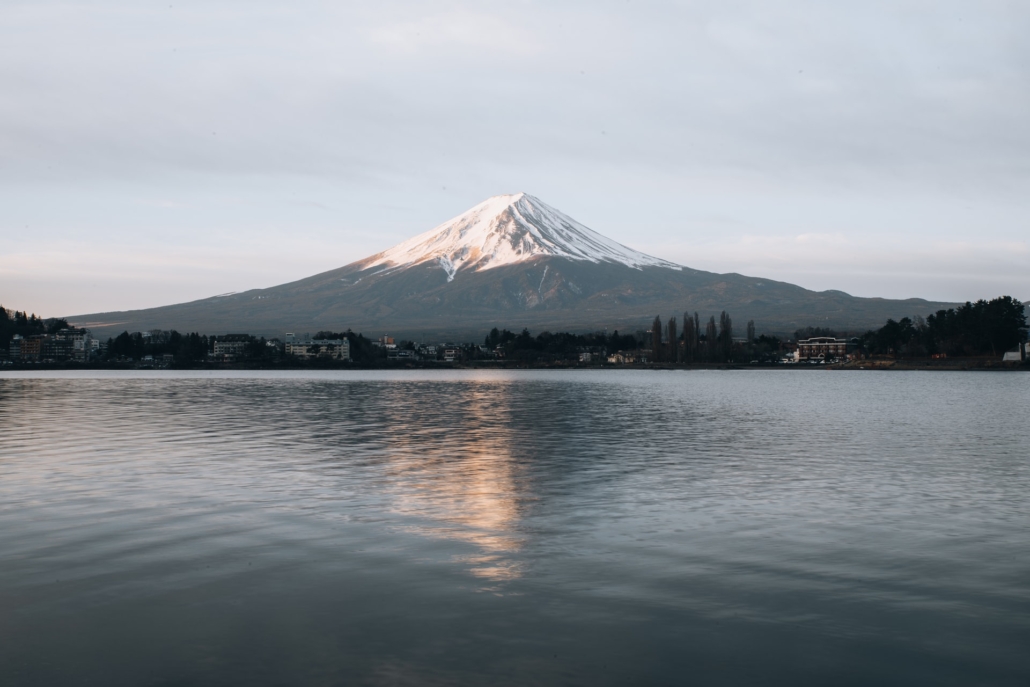
Clouds tend to block the view in the morning but often clear up as the day goes on. However, if you do have a cloudy day, there are plenty of things to do in Lake Kawaguchiko. Take a paddleboat out on the most famous of the Fuji Five Lakes, rent a bike to explore the small town, or even take a hike among the mountains. You’re able to view Mount Fuji from pretty much anywhere in town, so if the clouds move you won’t miss it!
While you’re exploring the area, keep an eye out for large numbers of migratory birds from all over the country. Lake Kawaguchiko and the Mount Fuji area have been designated an Important Bird Area for over 20 years.
Travel Tip:
You can trek to the summit of Mt. Fuji (3776 m / 12388 ft) every summer from around July to Mid-September! A minimum 1000 yen ($8.70) is required, but expect to spend more than 7000 yen/night for the full trip.
2. Great Wall of China – Huairou District, China
There are not too many places on the planet that can rival the magnificence of The Great Wall of China. This huge man-made landmark of Asia is at the top of many lists for people to visit and for good reason. It is simply amazing.
Only once you lay eyes on the Wall can you understand its complex beauty. It snakes its way over the Chinese landscape intimidating all who lay eyes on it. Said to be started as early as 221BC the Great Wall of China was originally a series of fortifications that protected the northern borders of China from invaders. Now it is one of the most visited historical sites in the world and a place where many people lost their lives in the construction of it.
Some sections of the Wall are made for tourists to visit easily and some are in ruins. The ruined sections of the Great Wall are usually a long way from any of the close cities and require a guide to help you navigate the dangerous sections. You can even experience an overnight stay on some of the ruined sections by using one of the watchtowers to sleep in.

The tourist-friendly sections of the Great Wall are an easy day trip from the capital city, and the best part to visit on your trip to Beijing is the Mutianyu Section of the Great Wall of China. Not only can you walk the Wall between towers, but nowadays you can also take a cable car directly to the top (it is still not suitable for people with mobility issues as getting onto the wall still involves at least 50 steps), grab a chair lift back to the bottom, or if you’re feeling adventurous, toboggan down the side of the wall. The possibilities here are endless!
For the best experience on the Great Wall of China, you need to be prepared. If you are one of the first in line for your tickets at the Mutianyu section of the wall this is brilliant as for a time, if you plan it right and get moving. you may find yourself in solitude on Great Wall of China , which is a wonderful, memorable, travel moment.
Recommended by Bec from Wyld Family Travel
Travel Tip:
Pack your own food to save a bit of cash. The food at the Wall is notoriously expensive!
3. Changdeokgung Palace – Seoul, South Korea
The capital city of Seoul in South Korea actually has four main palaces that can be explored on a visit to the region, however, if your time is limited and you must choose, then the majestic Changdeokgung just has to be on your list.
This palace is the best preserved of all the Seoul Royal Palaces and, for that reason, it is a fixture on the UNESCO World Heritage List. The palace has extensive grounds to explore as well as an enormous secret garden that can only be discovered as part of a tour.

If Korean history and architecture are of interest, then Changdeokgung will not disappoint with beautiful wooden buildings carefully painted and restored, reminiscent of the former glory days of the Joseon Dynasty. Easily accessible from either the Anguk or Jongno stations, Changdeokgung is very close to the lovely Bukchon Hanok Village and the quaint shopping laneways of Insa-dong, making it a great day out.
Individual entry tickets to the Palace cost 3000 won per person (expect to pay a little extra for the secret garden tour on top of this), but free admission is granted to those who choose to wear a traditional Korean dress called a Hanbok. This also means that there are lots of beautiful traditional dresses around the palace grounds that look brilliant in photos.
Recommended by Emma from Emma Jane Explores
Travel Tip:
Don’t miss out on the Huwon Secret Garden. It’s worth a few extra won!
Landmarks in Southeast Asia
A collection of epic Asian landmarks you can find in the Southeast part of the continent!

4. Bagan, Myanmar
Myanmar’s most wonderful landmark is definitely the temple city of old Bagan Myanmar, which is like a surreal landscape of exotic pagodas.
Old Bagan was once known as Pagan, a temple city founded in ancient Burma during the 9th century, and at one time there were more than 10,000 shrines here. The Pagan Empire was eventually conquered by Mongol invaders, and the temple city was left ransacked and abandoned.
Those still standing are completely fascinating to explore and photograph. Two of the top ones to see are the Shwezigon Pagoda and Dhammayangyi Temple, which are both spectacular! Today, the Old Bagan temples are the main sightseeing attraction of Myanmar, and they received 4.5 million tourist arrivals in 2019.
Bagan is located in central Myanmar, about 180 kilometers southwest of Mandalay city. The most popular way to get there from Mandalay is by air or road, although you can also go by train or slow boat.
Once you arrive in Bagan, the temples are spread out over a pretty large area, so you’ll need transport to get around. The usual way to do this is with a taxi, bicycle, horse cart, or e-bike (electric scooter.)
Regardless of how you decide to tour the temples, Bagan is sure to leave a lasting impression!
Recommended by David & Intan at The World Travel Guy
Travel Tip:
Get off the beaten path! Part of the fun of visiting Bagan is feeling like a full-on temple runner.
5. Mount Kinabalu – Sabah, Malaysia
One of the most beautiful landmarks in Asia is located in Malaysia: the imposing Mount Kinabalu. This natural wonder is located in the state of Sabah (Borneo) and with a height of 4,095 meters it is the highest mountain in the country, as well as one of the highest mountains in Southeast Asia.
Since the year 2000, this natural attraction has been on the list of UNESCO World Heritage Sites. Thanks to its beauty, tourists, as well as hikers from all over the world, come every year to climb to the top of this unique natural landmark in Asia.

©Places of Juma
The summit of Mount Kinabalu can only be reached by hiking with a guide. Guided groups are offered for this and you have to plan 2 days for the whole tour. For this hike, you do not need any special mountaineering skills, but you should have some basic trekking experience. The special thing about a visit is certainly the night hike to the summit, where you can watch a spectacular play of colors just in time for sunrise.
Mount Kinabalu is also beautiful because of its different landscapes and vegetation, which you can admire during a visit. Especially impressive is the mix of deep jungle with carnivorous plants at the base and the rocky summit with the most incredible mountain views.
Recommended by Martina from PlacesofJuma
Travel Tip:
Keep in mind you will NEED to get a trekking permit beforehand to check out this famous Asian landmark.
6. Batad Rice Terraces – Banaue, Philippines
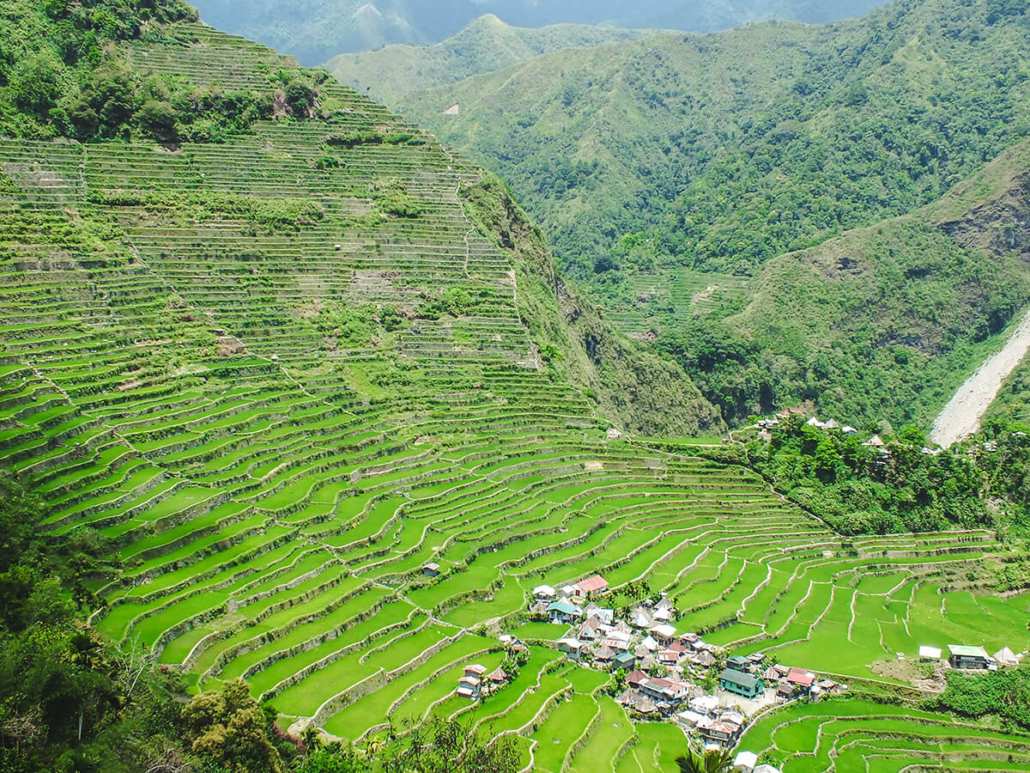
The Batad Rice Terraces is a spectacular cultural landscape that resembles a gigantic amphitheater in the municipality of Banaue. Built mainly by hand by the ancestors of the indigenous Ifugao people, these rice terraces were carved into the mountains more than 2,000 years ago. It is also one of the clusters of rice terraces inscribed on the UNESCO World Heritage List.
©How She Wanders
One of the most well-preserved rice terraces in the Cordillera Region, Batad’s rice paddies were built with stone walls that’s why they look more neat and stable compared to those with mud walls.
You can maximize your experience by hiking into the rice paddies or simply by staying in one of the indigenous huts and waking up to a breathtaking view of the terraces.
The best time to visit is during the planting season from March through May. The rice terraces are green and the sky is clear and sunny.
There’s a tiny village with around 1,500 people at the base of the amphitheater-like rice terraces tucked away from modern civilization.
There’s no transportation that can take you directly to the village, and it can only be reached by a 10-km jeepney ride from Banaue town proper to the saddle, then about a 15-minute hike down into the village through mountain trails.
Recommended by Dea from How She Wanders
Travel Tip:
The best view of the terraces is from the Awa View Deck, which can be reached by a manageable but moderate hike.
7. The Royal Palace Bangkok – Bangkok, Thailand
If you visit the Royal Palace you’ll end up seeing two iconic landmarks for the price of one, this is because the temple Wat Phra Kaew (The Temple of the Emerald Buddha) is situated within the palace grounds. Both of these stunning monuments need to be on your Bangkok Bucket List.
The ornate and intricate palace is situated in lavish and beautifully manicured gardens. Initially, it was a wooden structure, first built in 1792, however, subsequent kings added to and rebuilt sections in masonry.
What you’ll see today, and a myriad of styles from all these different additions. The place is still used today, so not all of the buildings are open to the public.
Often overlooked is the stunning collection inside The Queen Sirikit Museum of Textile. This museum houses the most lavish dresses and shoes you will probably see. Admission to the museum is included with the ticket to the Grand Palace complex.

After exploring the place, head towards the adjacent Wat Phra Kaew. Historically, this was built exclusively for the residents of the palace and was the royal chapel. The gateway to this temple complex is guarded by gigantic Yakshas; colorful, decorative, and armored lion-like demons.
The Emerald Buddha is Thailand’s most important Buddha shrine and attracts Buddhists from all over the world coming to pay their respects. The Emerald Buddha was carved from a single block of green jade and then shrouded in gold and diamonds.
The best time to visit the Grand Palace and Wat Phra Kaew is as early as possible. It attracts thousands of visitors per day.
Also, check on the day of your visit for opening times, generally, the palace is open every day, however, for official ceremonies or festivals, parts of it do close to public access. Allow at least 3 hours (ideally more) to fully appreciate the site.
Recommended by Becki from Meet Me In Departures
Travel Tip:
Because this is such an important shrine, rules for dress and how you conduct yourself are strict. Legs must be covered down to your ankles, as well as your shoulders, chest and upper arms must be covered. Police and guards are dotted throughout the complex, ensuring that visitors are obeying the rules.
8. Kelimutu Volcano – Flores Island, Indonesia
One of the most spectacular natural landmarks in Asia is the Kelimutu Volcano in Kelimutu National Park. It is located on Flores Island, one of the 15,000 islands that make up Indonesia. It is a 2-hour drive from Ende Airport.
Kelimutu Volcano is a dormant volcano with three gigantic different colored lakes. The lakes have formed in huge craters created from previous eruptions. Two of the lakes are located at the very top, while the third is found just below. All three lakes can change color during the year as they respond to the shifts in mineral deposits in the water, the weather, and volcanic gas.
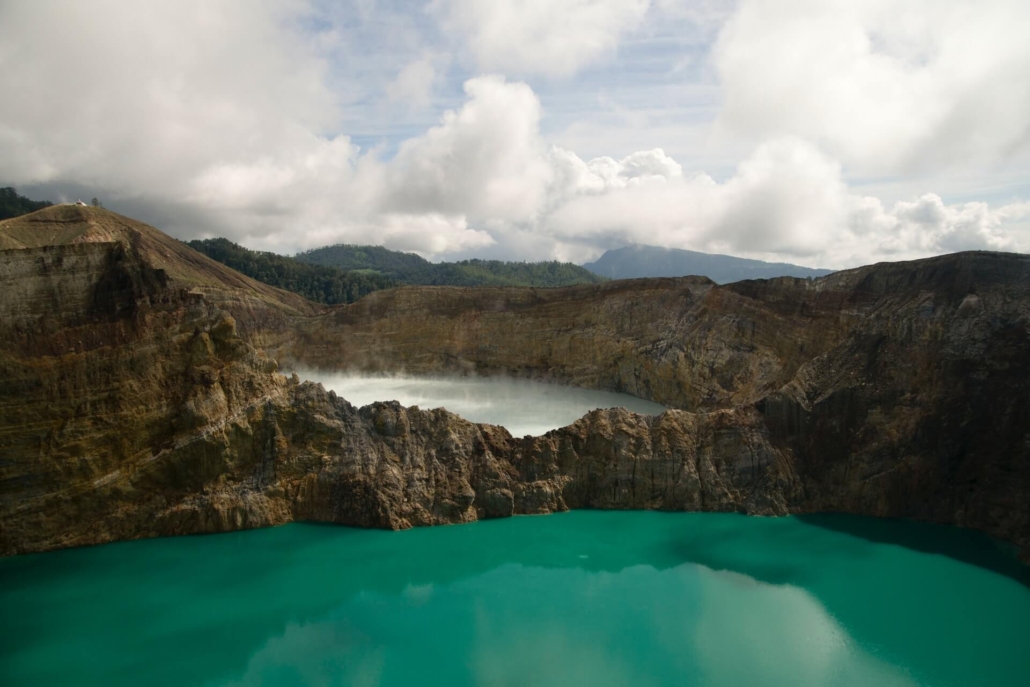
A special experience is to watch the sunrise from the peak. You must wake around 4:00 am in order to hike and reach the top in time. The hike takes around 45 minutes. The first half is a relatively easy walk, but the last half requires you to walk up steep stairs. Overall, you only need proper walking shoes with good treads to safely complete the hike.
Once you reach the top, you watch the sunrise while each lake is slowly uncovered as mist and clouds come and go. It is both magical and beautiful.
Recommended by Nicole from Go Far Grow Close
Travel Tip:
Visiting at sunrise between May-September gives you the best chance of a clear summit!
9. Halong Bay – Quảng Ninh, Vietnam
Halong Bay is a UNESCO World Heritage site, however, what makes it truly remarkable is that when seeing it, it feels like a scene from a fantasy movie! It’s no surprise that this is one of Asia’s most popular natural landmarks.
One of the King Kong movies was filmed here, and it made the scenes in the movie perfect as most of the islands are usually covered in a mist, making them seem mysterious and quite enticing.

Many islands are located in Halong Bay including Cat Ba, Ti Top, and Van Don and each of them has its own unique offerings when it comes to sightseeing.
The only way you can visit Halong Bay is by cruise and the best way to get here is from Hanoi, which is about 3 hours away. If you only have one day in Hanoi you can still do it as a day trip however you’ll only be able to do a quick trip and not spend the night on any of the islands or on the cruise.
Cruises can tend to be pricey however almost all of them are all-inclusive and tend to be quite luxurious and worth the price!
Recommended by Lavinia from Continent Hop
Travel Tip:
Try to allocate as much time for Ha Long Bay as you can. One overnight should be the minimum if you really want to see all the bay has to offer.
10. Angkor Wat – Siem Reap, Cambodia
Angkor Wat, located in the Cambodian city of Siem Reap, is believed to be the largest religious monument in the world. Built in the first half of the 12th century, it was originally intended to be a Hindu temple for the god Vishnu. Today it’s one of the most famous landmarks in Asia, and is even featured on Cambodia’s flag.
By the end of the 12th century, though, it had converted into a Buddhist temple and remained an important monument in the religion through the 1800s. The temple is incredibly grand and sweeping in scope- it covers more than 400 acres, with some structures towering up to 70 feet in the air. Angkor Wat is not only famous for its grandness, but also for the incredible artistry of its construction- its walls are hand-carved with thousands of bas-reliefs depicting important deities, figures, and stories from Hinduism and Buddhism.

It’s worth noting that the term “Angkor Wat” is colloquially used to describe multiple temples near Siem Reap, whereas, in reality, the other nearby temple complexes, Angkor Thom and Ta Prohm, are completely separate structures built on their own timelines.
To visit Angkor Wat, it’s best to hire a tuk-tuk driver the day beforehand so you can start your exploration bright and early. In fact, Angkor Wat is spectacular at sunrise- not only because of the soft morning light, but because you’ll get to experience the peace and tranquility of the temple without the throngs of tourists.
Another benefit of starting early? You’ll give yourself plenty of time to explore Angkor Wat and the other neighboring temple complexes- it can easily take a day (or more!) to truly see and appreciate these magnificent structures.
Recommended by Jessica Schmit of Uprooted Traveler
Travel Tip:
Get there early! You read it before–read it again. The closer you arrive to opening (and sunrise) the less people you’ll have to deal with. And trust me, this is definitely an Asian landmark that gets PACKED.
11. Borobudur Temple – Magelang, Indonesia
Borobudur temple is one of the most famous landmarks of Asia and For a good reason, of course. Borobudur, located in Indonesia, is the largest Buddhist temple in the world. It covers an area of fascinating 2500 m2 and was built like a 3-level pyramid from volcanic stones in central Java around the 8th century AD.
Borobudur temple represents a perfect Buddhist temple accompanied by lots of Buddhist symbolism. The three levels of Borobudur represent a Buddhist spiritual journey to the enlightenment: from the world of desires–Kamadhatu–across the world of form–Rupadhatu–to the world of formless–Arupadhatu. Borobudur temple is a masterpiece of Buddhist architecture with 504 Buddha statues and around 2670 reliefs related to Buddha’s past lives, teachings, and stories.

UNESCO declared it a World Heritage Site. So, it’s not surprising that the Borobudur temple is a landmark of Indonesia and one of the most visited sites in Indonesia. Borobudur is located on the outskirt of the town of Yogyakarta on Java island in Indonesia. Travelers usually visit Borobudur temple on a day trip from Yogyakarta.
Java is one of the most amazing islands in Indonesia, and it’s unfairly underrated compared to the more famous island of Bali. If you love historic sites, architectural treasures, and UNESCO sites, head to Java. Java is also home to Prambanan Temple, another spectacular temple near Yogyakarta.
Borobudur and Prambanan temples are visited on a day trip from Yogyakarta. Both of the temples are unparalleled masterpieces.
Recommended by Milijana Gabrić from World Travel Connector
Travel Tip:
Make it for sunrise (preferably on a weekday) to enjoy the temples without the crowds!
12. Kuang Si Falls – Near Luang Prabang, Laos
Kuang Si Falls, or Tad Kuang Si, as Laotians call them, are one of the most famous landmarks of Laos. Or is it a watermark then? It might be missing a sea, but the only landlocked country of Southeast Asia has its own turquoise water paradise we typically expect from tropical destinations.
Hidden in the jungle, 30 kilometers out of Luang Prabang, Kuang Si Falls is a sight to behold. With three cascade tiers (the largest waterfall is 50-meter high!), these milky falls over limestone rocks create the perfect backdrop for your future most popular Instagram images.

©Pipeaway
The ticket to enter Kuang Si Falls is Laos-cheap. For just 2 Euros, you get to see a stunning natural attraction, and best of all, you can even swim in it! While European waterfalls, wrapped under a title of a national park (such as Plitvice or Krka in Croatia) do not allow swimming or are on a path to forbid it, you can feel the beauty of Kuang Si with all your senses. And you better have tough skin in Laos, because water will be chilly!
The visit to Kuang Si Falls is most easily organized from Luang Prabang. With the town’s numerous temples, lively markets, great gastronomy, and fascinating history, you should extend your stay and check other things to do in Luang Prabang too!
The cultural capital of Laos, protected as UNESCO’s World Heritage Site, has a captivating soul. If you have time to visit only one place in the country, Luang Prabang should be your prime destination!
Recommended by Ivan Kralj from Pipeaway
Travel Tip:
There used to be some secret pools accessible from a slightly risky hike. The route has been shuttered again, but you can always check with other travelers for the most up to date info!
Landmarks in South Asia
Consisting of the world’s most beautiful mountains, you can easily write an entire separate article on South Asian landmarks.
13. Karakoram Highway – Pakistan
While backpacking Pakistan, you’ll undoubtedly come across one of the 8th Wonders of the World: the majestic Karakoram Highway. This 1300 km highway connects Pakistan with China and is one of the greatest architectural feats in recent history. Much of the paved highway is quite literally carved into the sides of mountains, and construction took many years.
While the KKH as it’s known begins close to Islamabad, the true magic of the route begins once you reach Gilgit, a small city in the territory of Gilgit-Baltistan, gateway to some of the most beautiful places not just in Asia, but the entire world.
Driving it is no doubt one of the best things to do in Hunza Valley, which just so happens to be my adopted home in Pakistan.

Look for the 7788 m Rakaposhi Mountain as you head towards Hunza Valley, which sits some four hours from the Khunjerab Border. One of the most iconic pieces of this famous Asian landmark can be seen right before the quaint village of Passu, which just happens to be one of the most stunning villages in Pakistan. Here you’ll be greeted by the Passu Cones, also called the Passu Cathedral.
Keep in mind that all of Gilgit-Baltistan gets COLD come December, and the road will be much more difficult to travel on, and Pakistan’s trekking season will be essentially over.
14. Amer Fort – Jaipur, India
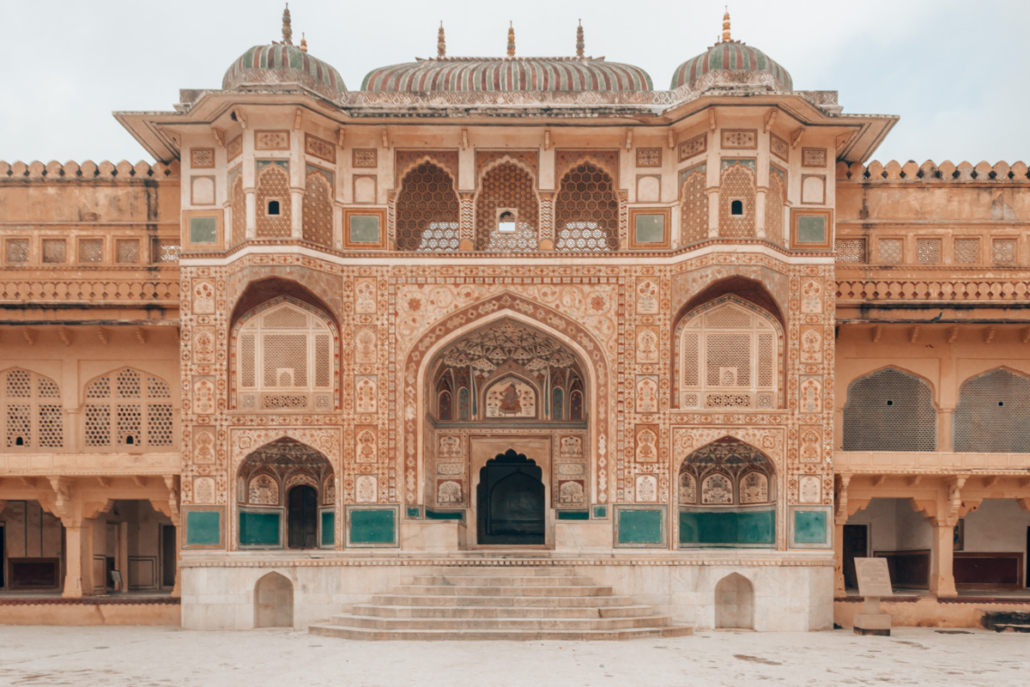
Another famous landmark to visit in Asia is the Amer Fort in India. It is a UNESCO World Heritage Site renowned for its incredible architecture consisting of beautiful doorways, symmetrical arches, and colorful frescos. Not to forget, a mirror palace that is a sight to behold for its glass inlaid panels and multi-mirrored ceilings
Amer Fort is located in Amer town, which is a few kilometers away from the pink city of Jaipur in Rajasthan. It was commissioned in the 16th century by Raja Man Singh, but many Rajputana successors continued to add elements to it for years to come. Amer Fort used to be the royal residence of the Kachwaha Rajputs until the capital shifted from Amer to Jaipur in 1727. It has been abandoned since then.
© Travel with CG
When visiting Amer Fort, you’ll notice that the entrance to the fort is on a hilltop. The main way to get there includes walking uphill or getting an expensive ride from the foot of the fort. However, there is also a lesser-known back entrance that is closer to the ticketing booth. If you don’t wish to walk, then you can ask your taxi driver to drop you there.
Another thing to keep in mind is that Amer Fort can get really crowded. If you want to take nice pictures without many people in them, then make sure to arrive at the opening hour to have the place to yourself before the tour buses come in. Getting a guide is also recommended as the fort is massive.
Recommended by Charu from Travel with CG
Travel Tip:
Lorem ipsum dolor sit amet, consectetur adipiscing elit. Aenean diam dolor, accumsan sed rutrum vel, dapibus et leo.
15. Sigiriya Rock Fortress, Sri Lanka
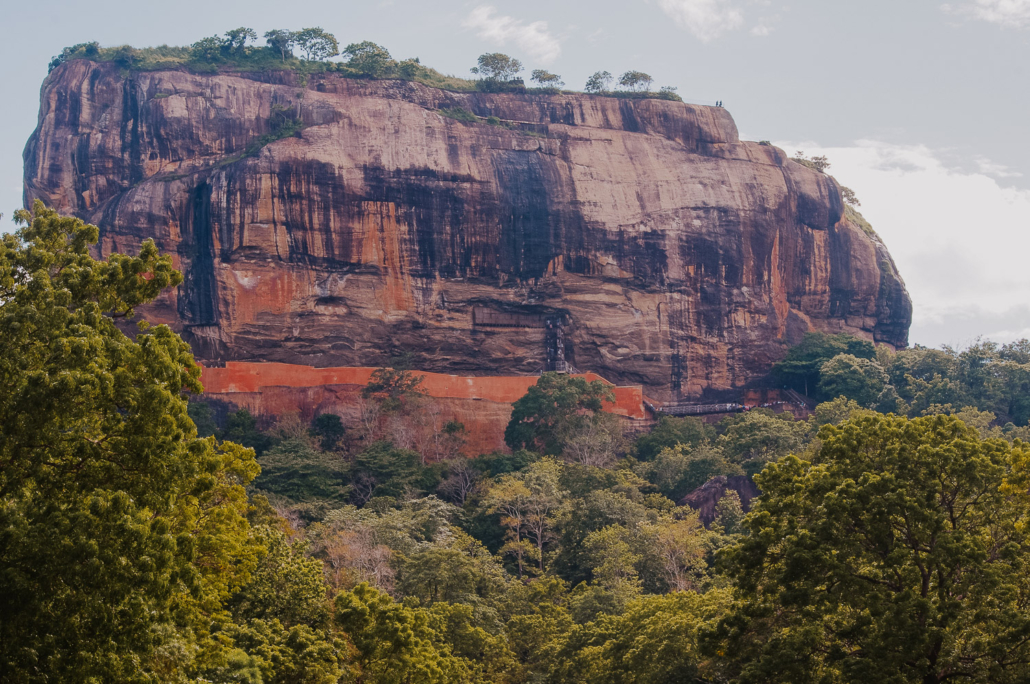
Standing over the Sri Lankan jungle at 200 meters high, the Sigiriya Rock Fortress, a UNESCO world heritage site, is one of the most famous landmarks in Asia and even the world. Situated in the central ‘green zone’ of the teardrop isle, volcanic activity created the towering rock column, creating a stark contrast with the surrounding environment.
In the 5th century, the rock column was used as strategically advantageous grounds by King Kashyapa. He built a new capital city here including the royal palace of Sri Lanka, originally located in Anuradhapura. This new capital city had substantial fortifications, panoramic gardens, impressive pools, and sophisticated fountains.
©HaleyBlackall.com
You can visit the Sigiriya Rock Fortress by staying in the nearby towns of Sigiriya or Dambulla. From here, grab a tuk-tuk to the main entrance. The entry fee is $30 USD, one of the more expensive entrance fees in the country, but well worth it. Make sure to explore the pools and gardens before heading up the side of the rock.
You will pass ancient frescos along your climb before reaching the Lion’s Gate (the old entrance to the royal city). Once you make it to the top, explore the palace ruins and make certain to take the time to witness the stunning view of the lush Sri Lankan landscape.
As one of the most popular attractions in the country, make sure to arrive at 7 AM opening time if you can.
Recommended by Haley of HaleyBlackall.com
Travel Tip:
Avoid visiting on weekends or public holidays if possible. The crowds get seriously crazy.
16. Swayambhunath (Monkey Temple) – Kathmandu, Nepal
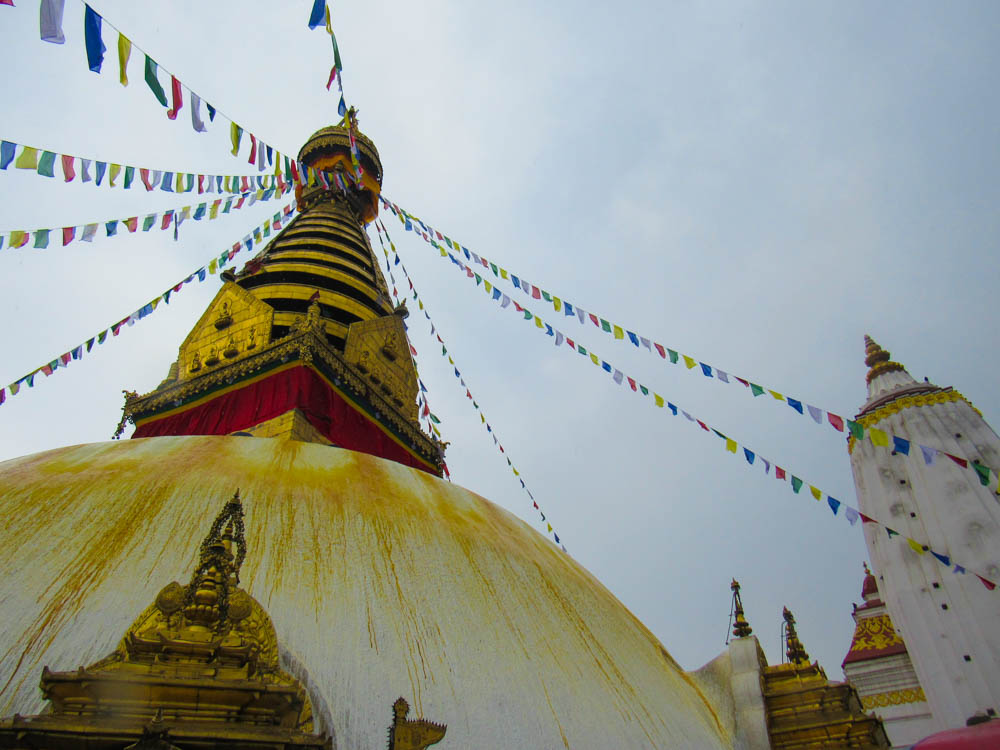
Known for its colorful accents, tranquil atmosphere, spectacular views, (and mischievous monkeys!), Swayambhunath (also known as the “Monkey Temple”) is an unmissable destination for any Nepal itinerary. Located atop a hill in the Kathmandu valley, Swayambhunath is considered one of the holiest sites for Buddhists and is incredibly significant to Nepalese culture.
The name Swayambhunath means “self-sprung” which derives from the mythology of the valley. According to legend, the valley was once a vast lake that sprouted a lotus flower which grew into Swayambhunath stupa. Perched atop this valley, Swayambhunath is located only a short cab ride away from most locations in the city of Kathmandu.
©All Over the Place
Once you arrive, you’ll trek up the 365-step staircase to the stupa and one of the most spectacular views of Kathmandu. There, you’ll come across the main golden stupa decorated with multicolored prayer-flags and the all-seeing painted eyes of Buddha.
All around the stupa you’ll find smaller stupas and temples, and of course the infamous sacred monkeys. The monkeys at Swayambhunath might be regarded as sacred, but that doesn’t mean they won’t steal your lunch! Be careful with any food and belongings that you may bring with you.
Even with these furry friends running about the stupa, Swayambhunath is an incredibly tranquil and spiritual site to visit. All in all, the Swayambhunath Stupa in Kathmandu is a must-see for photographers and travelers alike!
Recommended by Emma Schneck from All Over the Place
Travel Tip:
Make sure to dress modestly while visiting as this is a religious place!
17. Tiger’s Nest Monastery – Paro, Bhutan
If you are a culture enthusiast, Bhutan is an awe-inspiring country that should be added to your travel list. Known as the “Last Shangri-La”, Bhutan measures its prosperity by its national psychological wellbeing rather than its material wellbeing and is also the first carbon-negative country in the world. Its remote location and unique culture have produced some of the most fascinating Buddhist temples and fortresses seen today.
The most iconic of them all is the Tiger’s Nest Monastery. The sacred Buddhist site sits at 3,120m on the side of a mountain and can only be reached by foot. The monastery was constructed in 1692 around the cave where Guru Rinpoche first meditated. Guru Rinpoche is known as the “second Buddha” and is attributed to introducing Buddhism to Tibet and Bhutan.

©Groovy Mashed Potatoes
Traveling to Bhutan is very different from other countries. To visit the country, you have to visit with an official guide. Your guide will work with you on your ideal itinerary and organize all of your accommodation, restaurants, activities and transportation. Himalayan Glacier is an excellent tour guide to use as they are highly rated and handle all of your VISA work.
The hike to the Tiger’s Nest Monastery is 6.4 km roundtrip with a 518 m ascent. Altitude pills (Diamox) are highly recommended since you will be hiking above 2,500 m elevation. It may be a journey to get to the Tiger’s Nest, but the adventure is worth it!
Recommended by Cecily from Groovy Mashed Potatoes
Travel Tip:
The journey to the temple may take between 2-4 hours on foot. Start early to allow yourself time to appreciate it all!
18. Hampi- Karnataka, India
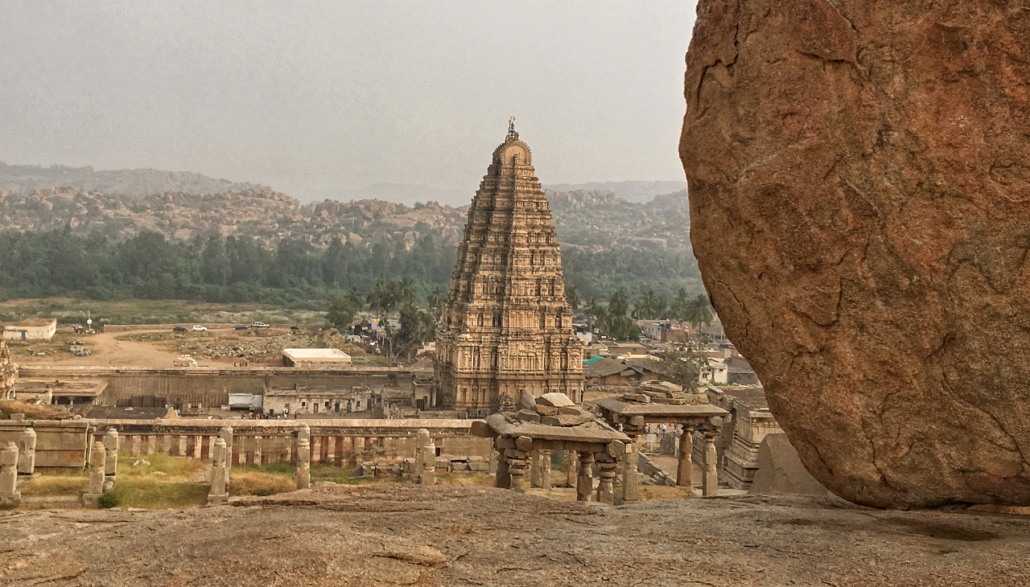
When it comes to landmarks, India has an embarrassment of riches. One of the most famous India monuments is Hampi, an abandoned city in Karnataka, South India. A vast site filled with priceless treasures, Hampi is one of those places that has to be experienced. It’s not just the impressive ruins that make it worth visiting, but the unspoken invitation to slow down and immerse in an evocative, timeless atmosphere.
Not only will you want to slow down, but you will also want to spend time visiting Hampi. It’s vast, about 25 square kilometers of a boulder-strewn landscape divided by the Tungabhadra River. Hampi was the main city of the Vijayanagar Kingdom that ruled central India for about 200 years, between the 14th and 16th centuries. After it was conquered, and partially destroyed, it was left in ruins.
©Breathe Dream Go
Today, Hampi is a UNESCO World Heritage Site that features about 1,600 monuments that include forts, royal complexes, temples, shrines, pillared halls, memorial structures, gateways, defense check posts, stables, water structures, and much more. These structures were very ambitiously designed and are often massive, with intricately decorated pillars and other features.
Among the many treasures of Hampi, the Vitthala Temple is one of the most ornate, and one of the most highly prized. Within the temple complex, the Stone Chariot is another highly regarded monument, a monolithic architectural masterpiece dedicated to Garuda – the eagle that is the vehicle of Lord Vishnu in Hindu mythology. There is much, much more to see in Hampi, and once you begin to learn about the building techniques and materials, you will be astounded by the complexity and ingenuity these medieval builders demonstrated.
The winter months (October to March) are the best time to visit Hampi as it is usually dry and pleasant.
Recommended by Mariellen from Breathe Dream Go
Travel Tip:
After Hampi, try exploring more of Karnataka. The beautiful southern state has tons to offer travelers!
19. Taj Mahal – Agra, India
One of the most amazing places to visit in Asia is the Taj Mahal. Sitting on the banks of the Yamuna River in Agra, the Taj Mahal dominates the skyline.
Commissioned by the Mughal Emperor Shah Jahan and built in the 17th Century, the Taj Mahal was a memorial to his beloved wife, Mumtaz Mahal.
The mausoleum is intricately carved in white marble which is almost luminescent. Inside is cool, to preserve the bodies, and you must wear shoe coverings. These are included in your ticket prices.

©The Silver Nomad
The Taj Mahal is set in gardens with the iconic long rectangular pools in front of it. There are many vantage points for taking photos, including from the sides and under benches!
Princess Diana, famously, had her photo taken with the Taj Mahal in the background and many tourists try to take the same shot. You may have to be patient and wait your turn.
It is worth getting there early, even if you must queue, as the Taj Mahal seen as the sun is rising is breathtaking. Dawn is also the perfect time to take photos as the light is at its best. You will also find that there are fewer tourists.
Make sure you don’t try to visit on a Friday, as the Taj Mahal is closed. Apart from Fridays, it is open from 30 minutes before sunrise to 30 minutes before sunset each day.
Recommended by Larch from The Silver Nomad
Travel Tip:
Getting to the Taj Mahal early is a MUST. Try to stay in a nearby Agra hotel for the best access.
Landmarks in West Asia
Landmarks located in the Western portion of Asia.
20. Petra – Jordan
Visiting Petra in Jordan is truly a dream come true. The buildings cut out of the rocks are truly breathtaking. The most famous building is called “The Treasury” and is what everyone sees in pictures of Petra.
It is however just one of many buildings (however the most beautiful one). “The Monastry” is another example of the craftsmanship of The Nabataean. Next to admiring the buildings, you’ll also be in awe of the Siq and the views walking on the stairs to “The Monastery”.
The Siq is a beautiful, narrow canyon and at the end is “The Treasury”. “The Monastry” is at a higher plateau and from the stairs leading to it you’ll have beautiful views.

Petra was the blossoming capital of the caravan kingdom of The Nabataean. The Nabataean were nomadic people from Western Arabia. Between 9 BC and 40 AC most of the buildings in Petra were built and the water plumping through The Siq was made. After 106 AC Petra became part of the Roman empire, the Romans built a colonnade street, temple, thermen and theatre, giving Petra her present look.
In the 4th and 8th centuries, there were several earthquakes, and all but the Bedouin forgot about Petra. In 1812 Johann Ludwig Burckhardt saw Petra again as the first European in ages.
Petra has been on the UNESCO world heritage list since 1985 and is one of the most stunning historical landmarks in Asia, situated in Jordan, in between Aqaba and the Dead Sea.
Petra is also nicknamed the “Rose-Red City” and the “City of Rock” since the buildings are carved out of the rose-red colored rocks. Despite the beautiful nicknames for the buildings, they’re grave tombs. On Monday, Wednesday and Thursday evening you can visit Petra by Night. Petra is then lit up by candlelight.
Recommended by Cosette from KarsTravels
Travel Tip:
April-May and October-November are the best times of year to visit Petra!
21. Mount Nemrut – Near Khata, Turkey
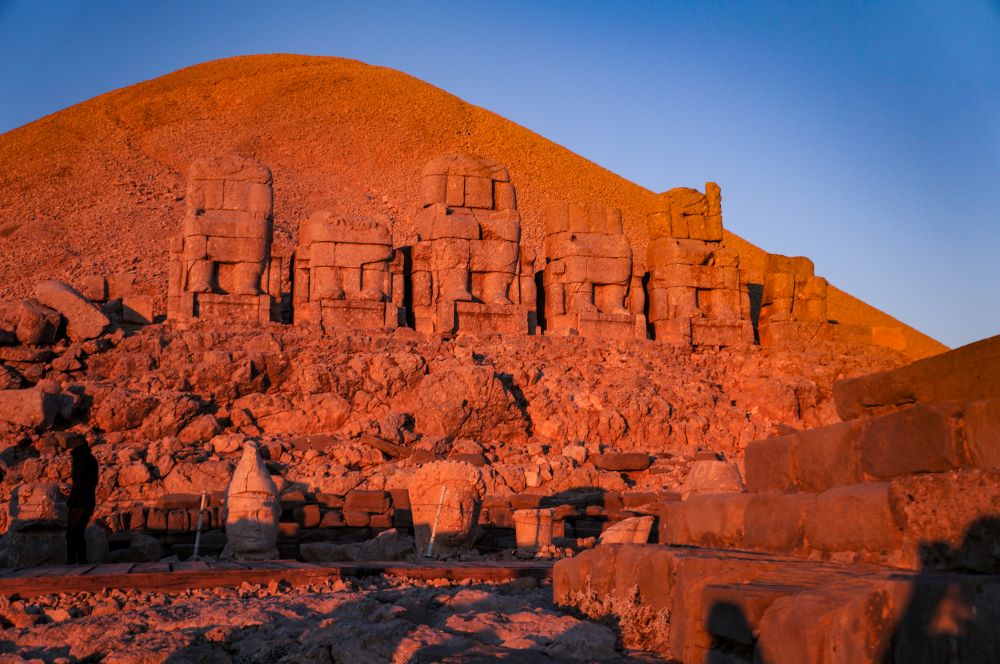
A UNESCO World Heritage site, Mount Nemrut, is one of the tallest peaks of the Taurus Mountains in south-eastern Turkey. Perched on its peak are ancient ruins – enormous stone heads, the remnants of huge statues of ancient gods, welcome travelers as they reach the summit.
©Faraway Worlds
Built over 2,000 years ago, these huge statues are thought to mark the tomb of the Hellenistic king, Antiochus I. The statues are designed to be viewed at sunrise or sunset, and the warm sunlight bathes them gold or red, depending on the time of year. At the top of the mountain, you’ll also find panoramic views of the surrounding countryside and even the Euphrates River.
If you want to visit Mount Nemrut, make your way to Kahta, the closest town, either by car, bus or on a tour. Mount Nemrut is an hour’s drive from the Kahta, and you can self-drive or take a tour. If you plan on watching the sunrise, a tour is a good option as you’ll need to leave in the early hours of the morning and road signs are easy to miss in the dark. If you want to see the sunset, feel free to drive yourself.
Recommended by Roxanne from Faraway Worlds
Travel Tip:
September is a perfect time of year to visit Mount Nemrut. The weather is usually fabulous and tourist numbers are low.
22. Sheikh Zayed Grand Mosque- Abu Dhabi, UAE
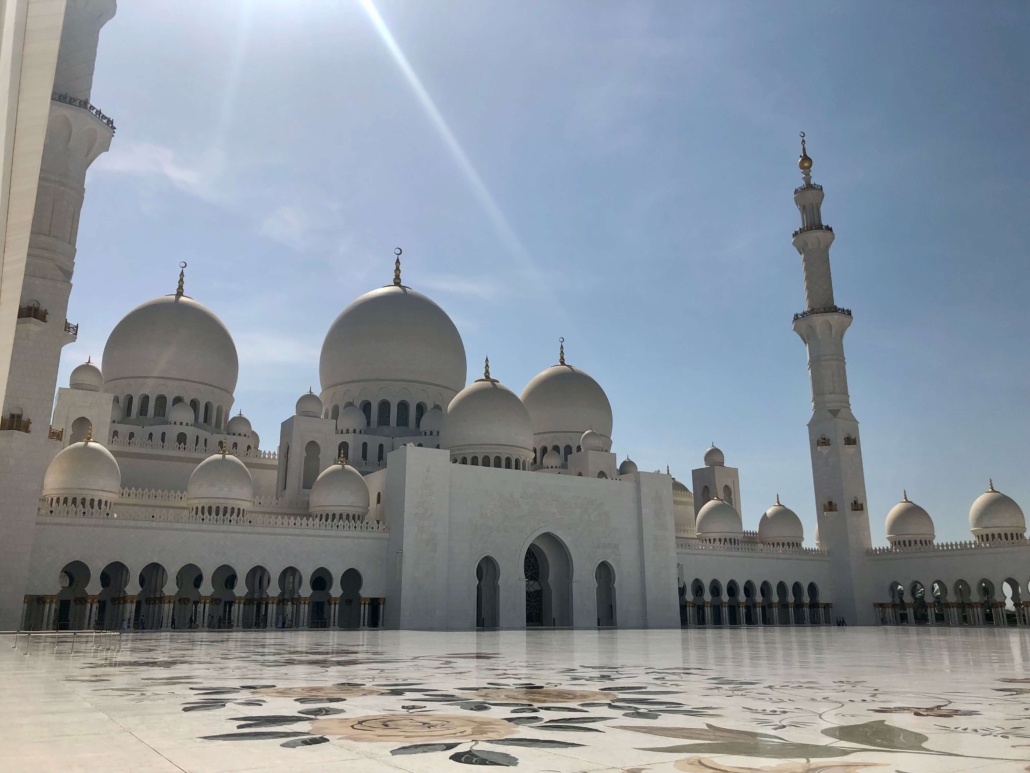
One of the most incredible landmarks in Asia is Sheikh Zayed Grand Mosque in Abu Dhabi. It’s famed for its beauty and visitors come from all over the world to bask in its beauty. You’ll feel like you’re in a fairy tale as soon as you step inside the mosque.
One of the first things that stand out about Sheikh Zayed Grand Mosque is its architecture. The mosque was designed by Yusef Abdelki, and he drew inspiration from other mosques and Indo-Islamic architecture around the world.
The building is an impressive mix of Islamic and modern styles, with a touch of classical elegance. The entire structure has been constructed from marble and precious stones such as jade, agate, turquoise, jasper, pearls, and onyx.
©Disha Discovers
Second, the size of the mosque and its contents are awe-inspiring. It’s one of the largest mosques in all of the Islamic world. It holds up to 41,000 worshippers and features over 82 domes and 96 columns.
A 5,600 square meter carpet covers the prayer hall floor and it took over 1200-1300 knotters. It’s actually the largest carpet in the world. Further, there are seven imported chandeliers in the mosque that consist of millions of Swarovski crystals.
The history of this mosque is just as grand as its architecture. It was mainly built with the aim of creating a place that would commemorate the UAE’s leadership, symbolizing Sheikh Zayed bin Sultan Al Nahyan’s deep love for his country. The mosque also features several features that are meant to celebrate the nation’s future development and education.
When visiting Sheikh Zayed Grand Mosque, it’s important to be respectful. Speak quietly and don’t pose disrespectfully for photos. Covering of the head is mandatory for women. Men are not allowed to wear shorts and women should wear loose-fitting clothing that covers the legs and arms.
Recommended by Disha of Disha Discovers
Travel Tip:
Keep in mind the mosque is closed to visitors EVERY FRIDAY.
Iconic Landmarks in Asia: Final Thoughts!
I hope that this epic list of the coolest landmarks in Asia has got you excited about all this incredible continent has to offer. It also happens to contain some of the cheapest countries in the world that are perfect for backpacking. But Asia’s not just where I fell in love with backpacking, but with history, too.
From forts that date back centuries, to natural Asian landmarks that just happen to contain the planet’s best landscapes, you can truly spend an entire lifetime exploring all that Asia has to offer.
But regardless of how many of these sites you make it to, rest assured that you’ll be in the presence of greatness. The landmarks of Asia are truly the world’s most impressive.
So what are you waiting for?
From Jordan, to Thailand to Pakistan and everywhere in between, there are some seriously awe-inspiring Asian landmarks out there to rock your next trip!


Samantha is the founder of Intentional Detours. Originally from the USA, she’s been backpacking the world since 2017, and is passionate about slow, adventure travel that puts local communities first. She has visited 19 countries and has been living in the Karakoram Mountains of Asia’s Hunza Valley since 2021. She’s super passionate about helping people get off the beaten path anywhere (on a budget of course), and her travel writing has been published in the likes of BBC Travel, CNBC, Business Insider, and more.


