

Planning on backpacking in Pakistan? This Pakistan travel guide has EVERYTHING you need to know. Includes itineraries, visa stuff, practical info, where to stay and more!
So you’re thinking of backpacking Pakistan?
Well congratulations, you’ve made an EXCELLENT decision. This is the kind of adventure that has the possibility to change you forever.
It sure did that for me!
Not only is Pakistan home to some of the world’s most epic landscapes, but it’s also where you’ll find the most legendary hospitality on the planet.
Awesome people, surreal scenery, and boatloads of cheap and tasty food- what more could an adventurous traveler want?
The only catch is that Pakistan is far from being the easiest country to travel to. But from my experiences living in and traveling around the country since 2021 (in addition to a separate four-month trip in 2019), I can attest that with a bit of research, it’s not exactly the hardest either.
It’s easy to fall in love with Pakistan, but it’s even easier when you’re prepared through and through. And that’s exactly where I come in.
Read on for an up-to-date, real-deal backpacking in Pakistan travel guide – provided from more than 3 years of living in and traveling to virtually every part of the country!

This post may contain affiliate links. This just means I may receive a small commission at no extra cost to you for promoting a product or service. I took and own all photos unless credited otherwise. You can read my full disclaimer here.
Why You Should Go Backpacking in Pakistan
Backpacking Pakistan hasn’t been this easy since before 9/11. The government is promoting tourism and tons of rules and regulations have been relaxed. But aside from it being easier now, it’s also still quiet here.
Get here while you can- Pakistan may still be an offbeat travel destination, but if the past few years have proven anything, it’s that more and more backpackers are heading to the Islamic Republic.

Any Pakistan itinerary is far from being as populated by foreign tourists but unrestrained domestic tourism (which consists of selfie-takers and trash throwers for the most part) is a MAJOR problem for the country’s most scenic locales.
It’s not like Pakistan will all of a sudden become a Disney World in the next year or two, but the sooner, the better from my perspective.
After more than 4 years living in Hunza, I now run tours to the valley that are committed to supporting local communities.
As additional roads are constructed and more and more people find out about Pakistan, it may become more crowded and more expensive, something I already experienced while visiting the Kalash Valleys.
Backpacking Pakistan Itineraries
Anything less than a month isn’t enough to see multiple regions of Pakistan without rushing, you can definitely focus on a specific region like Hunza in two weeks.

For those with a bit more time, here are a few different 1-3 month routes for all interests.
Tip: Don’t miss out on KPK– it’s beyond worth it!
2 Week Pakistan Itinerary
While 2 weeks is really pushing it given how things in Pakistan work, you can still get a solid taste of a specific region in this time. My recommendation?

Fly into Islamabad and head north to Gilgit Baltistan ASAP! Since your time is limited, your best option is to take a domestic flight to Skardu ($90-$120) to maximize your time.
Here’s what you should get up to next:

1 Month Pakistan Itineraries
If you have one month to travel Pakistan, your choices begin to open up. Here are a few recommended routes:
Pakistan Travel Itinerary 1- Taste of the North

Islamabad-Peshawar-Chitral-Kalash-Booni-Mastuj- Phander-Gilgit- Hunza
This itinerary gives you the opportunity to experience the almost “other country” feel of KPK while still seeing all those “most beautiful places in Pakistan” sights in Hunza.
Start in Islamabad (or Lahore if you’re planning on entering from the Wagah Border) before heading to Peshawar, my favorite city in Pakistan that’s no doubt home to some of the most hospitable people in the country.
Next, take the Hindu Kush Express night bus to reach Chitral, a lovely little town that you guessed it: is right in the Hindu Kush mountains. Chitral Gol National Park has stunning views before you head over to the Kalash Valleys.

The Kalash are traditionally not Muslim but follow their own unique religion, and have their own language and clothing. Bamburet has been ruined by commercialization, so I recommend heading to Rumbur or Birir.
Next up – the magic and beauty of Upper Chitral, which begins with the bucolic town of Booni, about 3 hours north. The Qaqlasht Meadows are the highlight here! Onwards you’ll run into Mastuj, which is a nice place to rest before tackling the stunning Shandur Pass as you coast onwards to Phander, your first official stop in Gilgit Baltistan.
After spending some time at Phander Lake, it’s about 6 hours to Gilgit where you can rest for a night before catching a cheap local van to Hunza Valley, which is really the best part of the entire country.
Pakistan Travel Itinerary 2- Yay KPK!

Peshawar-Mingora-Kalam-Thall-Chitral-Upper Chitral-Phander-Gilgit
For those looking to really get to know Khyber Pakhtunkhwa, this is the itinerary for you! First get to Peshawar (the map once again takes into account the fact that many backpackers will be starting from Lahore) before heading 4-5 hours north to Mingora, the major city of the famous Swat Valley.
After a day or two in Mingora, you can either find shared minivans or cars to delve into the natural beauty of Kalam. While there, don’t miss out on Boyun and Utror. You can also get a bit of trekking in at the Kandol (more touristy) or Spinkhowar Lakes.

If you visit in summer, you can take a shared (or private) jeep over one of the most stunning motorable mountain passes in the region: 13,000+ ft Badogai that connects Swat with the Dir District. You’ll arrive into Thall, a highly conservative albeit beautiful town that has some stunning views and peaceful surroundings.
Next up is Chitral, where you can also check out the Kalash Valleys before continuing north. Booni and Mastuj will be on your route before the enticing and challenging trip to Yarkhun Valley becomes a possibility. The folks at Tourist Garden Inn in Mastuj can help you see it – one of the most untouched and least visited places in all of Northern Pakistan.
Then, see your way over the Shandur Pass before stopping in my beloved Phander on your way to Gilgit. From there, you can fly or drive back to Islamabad or even tack a bit of Hunza onto your itinerary.
Pakistan Travel Itinerary 3- Best of Hunza

Karimabad-Gulmit-Ghulkin-Passu-Chapursan–Shimshal
A month traveling in Hunza will give you enough time to really get a feel for this magical place in the world, which of course I’m biased toward as it’s become my home!
You’ll also have enough time to get into a few treks. Here are my favorites in and around the valley:
- Patundas (Gojal): 3 days
- Shimshal Pass (Shimshal): 7-8 days including transit to the valley
- Rakaposhi Basecamp (Minapin, Nagar): 2 days. I don’t care what anyone says, you’re doing yourself a SERIOUS disservice if you try to do it in one day!
Pakistan Backpacking: 2 or 3 Month Itineraries
Trust me – if you have the time, spend at least 2-3 months in Pakistan if you really want to see it all!

This is a massive, diverse country that luckily allows tourists to stay for quite a long time if you’d like! Take advantage of it with these itineraries.
Itinerary 1- The North Moving East

Lahore-Peshawar-Mingora-Swat-Thall-Chitral-Kalash-Mastuj-Yarkhun Valley-Shandur Pass- Phander-Yasin-Gilgit- Karimabad- Gulmit-Ghulkin-Passu-Chapursan–Minapin–Baltistan
This is better for a 3-month itinerary but can certainly be done in 2 months. All the above will give you a well-balanced and diverse look at Pakistan’s sweeping mountains, which yes do exist in KPK as well!
Adventurous travelers can also look into visiting Shimshal and Hushe Valleys for even more of what Gilgit Baltistan has to offer.
Itinerary 2- Up AND Down

Lahore- Peshawar- Mingora- Swat- Thall-Chitral- Kalash- Mastuj- Yarkhun Valley- Phander- Yasin- Gilgit-Gulmit-Ghulkin-Passu-Chapursan-Minapin-Islamabad-Interior Sindh–Karachi
This itinerary is best to start around August and finish by November, as that’s when visiting the south will finally be bearable. Yes, Lahore and Peshawar will be scalding at the beginning BUT temperatures will fall as soon as you reach Mingora.
Keep in mind that Karachi / Interior Sindh are both FAR AF! Even by train, it will still take you over 24 hours just to reach Karachi from Islamabad.
It’s also possible to arrive in March/April and see the South first, before making your way to the North when the season begins in May.
Best Time to Visit Pakistan
The best time to visit Pakistan is highly dependent on what you want to do.
If you’re trying to visit the epic mountains of Gilgit Baltistan and Khyber Pakhtunkhwa, the weather is at its best from May-October.
June-July trends toward the largest numbers of domestic tourists, and higher prices. But it’s absolutely worth it if you’re in search of the best mountain trails and alpine lakes on the planet.

From late October – early November surreal fall colors will definitely be popping off and are 100% worth planning a trip around!
But if you’re hoping to visit the south of the country (and actually enjoy it without literally melting,) your best bet is to travel to Pakistan between November-April.
Come April, all cities begin to boil. And don’t underestimate me – we’re talking 40+ degrees C/ 107 degrees F here.
Best Places to Visit in Pakistan
Y’all, Pakistan is HUGE.
It may not be as large as its neighbor India but it would take years on end to cover it all. When I first arrived, I literally thought Karachi was only 6 hours from Lahore- I soon learned how wrong I was when I found out it was actually 24 hours.
Here’s an in-depth guide on where to go and what to do on your Pakistan travel adventure.
Punjab
Home to the Wagah Border crossing, Punjab is where many travelers (including myself) got their first taste of Pakistan. Trust me when I say it only gets better from here!
While the province is quite large, most of it is off-limits or difficult to travel in – so the following will focus on where you’ll actually be able to explore freely.
Lahore
Lahore is a cacophony of chaos, magnificent historical sites, and all-around epic places to visit. The city has some of the best food in the country (looking at you, puri and channay wallas).

I’ve spent well over a month in this city- and it’s definitely a fact there’s always another awesome restaurant to eat at or a cool locale to discover. If you only have a few days here’s what I wouldn’t miss:
Dhamal is an epic Thursday night event- and one of my favorites out of all my travels. Followers of Sufism come out to swirl and whirl themselves into a trance to the reverberating sounds of thick drums.

It’s easy to get caught up in the thumping beats and dancers’ jingling ankle bracelets- all complimented by some of Pakistan’s smokier stuff. My favorite spot to see this is the shrine of Madho lal Hussain, though you can also catch it at Shah Jamal.
The Wazir Khan Mosque is an architectural beauty dating back to the Mughal era and should not be missed under ANY circumstances.
Rainbow-esque colors paint the mosque’s exterior, and inside you can find innumerable Mughal-era frescoes!
Wazir Khan is inside the Walled City, only several hundred meters from the Delhi Gate entrance. While you’re there, take a stroll around the Old City- there’s truly always something new to be found.

These are some more Mughal relics on the outskirts of the Walled City. The Lahore Fort charges a 500 rupee entrance fee for foreigners, and though I’m not into exploitative dual pricing, but it’s worth it in this case.
The fort is MASSIVE and is best visited on weekdays to avoid crowds. The Sheesh Mahal ceiling is a must-see, though one can easily spend all day here admiring the fort’s architectural and artistic delights.
The Badshahi Mosque is widely known as Lahore’s most iconic landmark, and for good reason. It’s massive, beautiful, and remains in impeccable condition despite existing since 1673. It’s best to combine these two, as they’re literally right next to each other.
Tip: To get an epic view from above WITHOUT breaking the bank, head up to the Haveli Restaurant on the “trendy” food street and just order a chai. The chai is deff overpriced but sometimes the views are worth it and this is one of those times!
Most backpackers totally skip this one- but trust me, you definitely shouldn’t. The Ravi River sits on the outskirts of Lahore, about 45 minutes or so from the Walled City.
Hundreds of water buffalo can be seen floundering along the riverbank, and the reflection at sunset is a must-see, I mean just look at this photo!

The river isn’t without a bit of history though- accessible by a short row boat ride lies Kamran’s Baradari, a beautiful summer pavilion of the Mughal era.
There’s no entrance fee here, though sadly much of the interior has been taken over by graffiti. Nonetheless, the structure and grounds are still beautiful and well worth the trek.
Whilst visiting on a Sunday I also stumbled upon a donkey cart market behind the grounds- the more you know! In the general vicinity is the INSANE Jahangir’s Tomb. The final resting place of a former Mughal Emperor, this relic will make you feel like you’re far, far away from any city.

If you love food then you’ll love Lahore. There are thousands of places to choose from, for all tastes and cravings. Here are some of my favorite local treats:
- Butt Karahi Tikka- all the meats!
- Siddique Kebab Shop- The paratha with beef tikka here is insane
- Anarkali Bazaar Puri- a small street-side shop but some of the best puri bread I’ve ever had
Islamabad
Ah, Pakistan’s glitzy, planned capital city! What it lacks culturally it does make up for in parks and viewpoints- the hills around the city cater perfectly to running and sunset-watching.

It’s likely you’ll have to stop here at some point while backpacking Pakistan, so keep in mind that you can still find cheap food but in general, Islamabad tends to be more expensive than other spots in the country.
There aren’t many things to do in Islamabad, but there are still some!
The largest in Pakistan, Faisal Mosque is a must-see if you have a day in the capital. Fun fact: The mosque’s trendy design was inspired by the look of a Bedouin tent!

The Margalla Hills that surround Islamabad are stunning- sunset views, picnics, runs and dinner with a view can all be found up among them.
Rawalpindi is Islamabad’s “sister city” and is often skipped by most tourists, save for getting on or off a long-haul bus at its bus station.
But it really shouldn’t be–the city has far more history and personality than Islamabad – just take a look at the amazing Jamia Masjid or go haveli-hunting in the Old City.

Rawalpindi is about 1 hour from Islamabad and can be reached by Metrobus or inDriver/Careem.
Traveling Elsewhere in Punjab
There are no real security concerns anywhere in Punjab, but unfortunately, the farther you get from Lahore/ Islamabad the more likely issues with the army/police become.
Reaching places like these is easiest with your own transport. Of the following I’ve only visited Kasur, but hope to make it to the others sometime soon.

- Kasur- Home of famed Sufi poet Baba Bulleh Shah’s Shrine, this small city is only 45 minutes from Lahore and can be reached by local bus or Careem.
- Rohtas Fort– A 16th-century fortress found near the city of Jhelum. Seeing as its only 2 hours away, this is best visited from Islamabad.
- Neela Sandh Waterfall- This is located about 40 km away from Islamabad and is best visited as a day trip with your own vehicle
- Katarpur– Newly opened and now the largest Sikh Gurudwara in the world, this place looks beautiful- but its not clear yet if foreigners are allowed to visit. Katarpur is about 2 hours from Lahore and I highly recommend getting the latest update before making the journey out there
- Harappa- The former center of the Indus Valley Civilization, Harappa is 24 km from the town of Sahiwal which reportedly is possible to stay the night in.
- Multan and Bahawalpur – These cities of South Punjab have a ton to offer history buffs but are unfortunately not fun places for foreigners. You’ll have forced 24/7 security that will even come with you to buy a bottle of water. The irony is both places are extremely safe – the protocol is pure drama. Personally, I haven’t made it to either for the above reasons. You’ll have to think about if the scenario is worth it to you.
Gilgit-Baltistan
Ah, Gilgit Baltistan. What leads most backpackers (including myself) to Pakistan in the first place and home to the most epic mountains in the world.

The entire Gilgit-Baltistan territory (no, it is NOT an official province) is MASSIVE- it would take you months to briefly visit everything, and that would just be scratching the surface.
Gilgit City
Everyone visiting GB will pass through Gilgit at some point. There’s not much to do or see here- the city is crowded, dirty, and very much a transit zone.
Fairy Meadows
These meadows are beautiful- they do give a pretty epic view of Nanga Parbat, the world’s 9th highest mountain. But on some real talk- I wouldn’t really recommend visiting unless you don’t mind crowds and high prices.
Nevertheless, Jeeps (the only vehicles that can manage the road) to the meadows leave from Raikot Bridge, which is easy to access via bus, taxi, or hitchhiking from Gilgit.

Credit: Shutterstock
If you’re looking to take the bus route, head to the main NATCO office in Gilgit to catch one going in the direction of Chilas.
Once you get down at the bridge, you’ll have to pay at least 8,000 rupees for a return jeep ride on what’s been given a spot as one of the most dangerous roads in the world. Unfortunately, walking the road is not allowed.
For me, this was way too expensive and not worth it. In the past few years, Fairy Meadows has become one of, if not the, most popular domestic tourist attractions in Pakistan. Domestic tourists = obnoxious, uncivilized behavior and lots of thrown trash.
Hunza Valley
The crown jewel of Pakistan travel and where I now graciously get to call home, Hunza Valley is undeniably beautiful and one of the best places to visit in Gilgit Baltistan. It’s most travelers’ first stop in the region and can definitely keep you busy for a while.

Hunza is a massive district rather than a single town, and in turn contains many Gilgit Baltistan bucket list items (though there are loads more off this beaten track, too).
Karimabad is super popular with tourists and many stay here before heading further into Hunza and beyond.

It’s known for being the home of the Baltit Fort, which has epic af views of the entire valley below. Nearby Altit boasts the similarly famous Altit Fort, which historically was related to its Karimabad-based relative.
Locals are used to tourists, it’s easy to get around, and due to the fact that most Hunzai are of the Ismaili sect of Islam (the most liberal), the village is a fab intro to Gilgit Baltistan.
Upper Hunza Valley (Gojal)
As beautiful as this lake may be, its origins are anything but. Attabad was created in 2010 after a massive landslide crushed an entire village- and formed this turquoise wonder in its wake. The lake is about 1 hour from Karimabad.
It’s possible to hire an overpriced taxi, but as a backpacker, I recommend hitchhiking- it’s the best way to see the KKH and you won’t have to wait more than a few minutes for a ride during high season!

For those looking to do more than just photograph and admire, boat rides and jet ski rentals are possible too.
Ghulkin is one of the most picturesque villages in all of Gojal and sits way up above the road, free from any sounds of traffic! Simply wandering about this idyllic hamlet is one of favorite things to do in Hunza Valley.
Its proximity to popular places like the Hussaini Bridge, a rickety, fear-inducing bridge that crosses a fast-moving river, and the Passu Glacier makes it a solid place to base yourself for a bit.

You can also access the Patundas Trek from Ghulkin, a 2-4 day adventure that literally brings you to what’s known as the table of the mountains.
If you’ve looked up ANYTHING about Pakistan, you’ve definitely seen the Passu Cathedral, a stunning mountain rock formation that somehow resembles cones.

The village of Passu banned homestays a few years back, so your only option for staying is guesthouses on the road. That doesn’t mean you can’t visit the village during the day though!
Besides admiring the cones and wandering about, treks to the Passu Bridge and Passu Glacier are also possible adventure ideas for your time in the village.

It is also a MUST to visit the best restaurant I’ve ever been to in my life, otherwise known as the Yak Grill. The Yak Grill serves, unsurprisingly, yak and their burgers are truly life-changing.
Next up: the highest motorable border crossing in the world!
Yup, Pakistan’s border with China sits at a whopping 15,397 feet and is super popular to visit regardless of whether or not crossing it is in order.
The closest town to the border is called Sost, though the town itself isn’t much to see. As of 2024, foreigners need to pay a $40 USD entrance fee once crossing into Khunjerab National Park a bit before the border.
Off the Beaten Path Places to Visit in (and near) Hunza
As should be clear, Hunza is HUGE and all the above spots are just a small portion of what it contains.
For those looking to get off the kinda beaten KKH trail, I recommend you check out these spots- they’re remote, unique, beautiful, and see minimal domestic traffic:
Chapursan Valley

A remote village close to the Afghan border, this beautiful hamlet is my idea of a perfect mountain break. Due to its difficult-to-access location, Chapursan Valley is one of the least visited valleys in Hunza. It’s also home to the mystical shrine of Baba Ghundi.
Shimshal Valley

Also beautiful, also remote, and only accessible through a wild AF 3.5-hour jeep ride over one of the world’s “most dangerous roads” Shimshal Valley is a trekker/mountaineer /nature lover’s dream
Nagar Valley
Nagar is a separate district, not just a valley, and is most well known for homing Rakaposhi, a 25,000+ foot mountain which you can see up close by doing the Rakaposhi Base Camp Trek.

Nagar is more than just Minapin (the starting point for the trek) though! Dreamy scenes and hospitable locals make this infrequently visited place one that definitely deserves more backpackers.
Skardu (Baltistan)
Baltistan is home to K2, the 2nd highest mountain in the world and the famed K2 Basecamp Trek, the main reason many backpackers head over. Skardu is the main “city” in the region and where the airport is located. It acts as a hub to other notable treks and locales.
Skardu city is about 3.5 hour’s ride from Gilgit, and you can easily find shared cars or jeeps heading that way from the NATCO bus station parking lot.

There’s not that much to do in Skardu itself, but that doesn’t mean there’s nothing! With just a day or two, take a walk up to the famous Kharpocho Fort for a bird’s eye view of the entire mountain city.
My other favorite thing to do nearby is visit the majestic Sarfaranga Desert. At over 7,000 ft, it’s one of the highest deserts on the planet and it’s hella’ fun to play in the sandy dunes. Other activities near the city center include hiking up to the hella’ steep Marsur Rock, and visiting Nansoq Village, the first all-organic settlement of its kind.
The Kachura Lakes are also a popular tourist attraction close to Skardu. The lower lake is a super bougie Shangri La resort, BUT the upper lake is worth checking out if you find yourself in the area.
Deosai Plains National Park
Deosai is a stunning high-altitude alpine plain ~ 30 km (about 6 hours) from Skardu.
The national park has an elevation of over 13,000 feet and is home to TONS of stunning plants and wildlife- including some of the most dangerous animals in the world. Sounds good right? Well… almost.
Unfortunately, getting to Deosai is damned expensive without your own vehicle, though it is possible to catch public jeeps if your lucky.

Credit: Shutterstock
If you have your own vehicle, keep in mind the road is in terrible condition and is only open from late June- October/November every year.
Major camp sites in the park include Sheosar Lake, Bara Pani and Kala Pani– but there are others marked as well.
Note that camping isn’t allowed just anywhere. Private, or “special” jeeps as they’re called, can cost 10,000 rupees or more.
Obviously, I don’t recommend this. Catching a shared public jeep can cost about 1,000 rupees/ person and hitchhiking is also an option, though its likely many cars will be already filled with other tourists.
Offbeat Places to Visit in Baltistan
- Hushe Valley – Hushe Valley is known for its myriad of trekking opportunities but is worth a visit for non-trekkers alike. Numerous picturesque villages lie within Hushe, and it hasn’t been at all commercialized due in part to how hard it is to access.
- Khaplu – Approximately 3-4 hours from Skardu, Khaplu is much quieter than Skardu and where you’ll be close enough to numerous not-too-hard-treks.
- Barah – Azure river views you can actually swim in and the start of the Barah Broq trek, another adventure you won’t need a permit for (unlike K2.)
Astore Valley
Astore is pretty unexplored compared to most parts of Gilgit-Baltistan, but it shouldn’t be!
It can be accessed from Skardu-Deosai-Astore or from the Karakoram Highway. There are no buses that ply here, so if you don’t have your own vehicle hitchhiking or shared local jeeps are your best bet.

Credit: AlexelA/ Shutterstock
These days, Astore has become known for being home to the OTHER Nanga Parbat Basecamp Trek, which I certainly recommend over the main one. Starting from the remote village Tarashing, you can make it to the basecamp and back in a single day.
Ghizer District
If coming from Mastuj, there usually is a NATCO minibus that leaves at a very painful 5:00 AM. This route will take you over the beautiful yak-filled Shandur Pass- but keep in mind that the bus doesn’t always run.

If coming from Gilgit, the process is the same except that the bus (when running) leaves at 6:00AM. If you’re down to hitchhike, it will be MUCH easier to do so from Gilgit than from Mastuj.
Expect the ride to take about 5-6 hours, AND note that you want to be dropped off at Phander Lake, as the main town a few miles away has nothing to see.

Phander doesn’t have any manmade attractions or epic hikes, but it doesn’t need them. Its lake by the same name kept me happy for more than a weeks spent there, and there’s a multitude of villages around to keep a curious traveler occupied.
Shahzad can also point you to a short viewpoint hike that offers stunning views of the whole valley.
Yasin Valley
About 2 hours from Phander lies Yasin. Even less explored than Phander, this beautiful valley houses numerous villages and extreme trekking opportunities.
Taus is the name to look out for when heading in from Gupis.

Yasin’s northernmost village of Darkot can be used as a starting point to reach Karambar Lake (which is located in upper Ishkoman Valley) via the Darkot Pass. Unfortunately, an NOC is definitely required for this, but it’s worth a note.
Nevertheless, Darkot itself is magical and you can spend as long as you want there without prior permission :)
Whether you’re coming from Phander or Gilgit you’ll first have to get off at a small-sized town called Gupis (unless you’re hitching or have your own ride).
Gupis can be reached using the same minibus/ NATCO bus route used to reach Phander.

If coming from Mastuj, Gupis is past Phander and if coming from Gilgit it’s before Phander. From Gupis local transport can be arranged into Yasin Valley for around 500-1000 rupees per person depending on how far you want to go.
Like Phander, there’s not much to do in Yasin aside from hiking and getting into some seriously epic nature. Wander around the villages, meet locals, find viewpoints, chill by the river, and forget the busy ways of the rest of the world for a while!
Ishkoman Valley
Also part of Ghizer, Ishkoman is a primarily Wakhi Valley that remains free of mass or package tourism- AKA ideal for us backpackers.
30 villages and numerous lakes can be found here including the famous Karambar Lake, which can be accessed from Upper Ishkoman through a long, high-altitude trek.

To reach the valley by public transport, you need to first stop at Gaukuch, a small city less than 2 hours from Gilgit. From Gaukuch, you can find various shared vans and cars heading towards the valley from the main bus lot shown below.
Khyber Pakhtunkhwa
A province that gives you a taste of Afghanistan without having to cross the border…
Peshawar
Peshawar is a beautiful old city that definitely gives a feel of being in an entirely new country.
This locale will definitely keep you busy for at least two days, but I definitely could have spent more time in this mesmerizing old metro!
Peshawar’s Old City is where you can really get a feel for its unique vibe- notable places here include the beautiful Sethi House and the Masjid Mahabat Khan, all of which are found within the Qissa Khwani (storyteller’s) bazaar.

In the Namak Mandi bazaar, you’ll find the famed Charsi Tikka restaurant that’s definitely worth having a meal in, though the restaurant I’m about to mention is even better ;)
Next up, get ready for the thrills you’ll find on the outskirts of town. The Khyber Pass Gate is set at the beginning of the famous Khyber Pass, an ancient trading route of the Silk Road …which unfortunately can’t be accessed without an NOC. But the gate is worth a visit nonetheless!

Meanwhile, the Kharkano Market is a few blocks from the gate and is famous for being a smuggler’s market- all types of American goods from Afghanistan can be found here!
To cap off the area, make your way to Khyber Shinwari, a super local restaurant that’s 10000x better than Charsi Tikka and is home to hands down, the best meat in Pakistan.
Do note that it’s essential to wear local dress while visiting these places- and even better to have a Pashtun friend with you.
Aside from these giants, take a day to just wander about and see where you end up, you will undoubtedly get asked for tea no less than 100 times.
Swat Valley
Swat Valley was easily one of my favorite places in Pakistan. The incredible hospitality of the Pashtun people combined with fairy-tale like landscapes makes it one of my most recommended places for backpackers to go.
You’ll likely start your journey in Mingora, the capital of the region and home to some pretty cool Buddhist relics. As surprising as it may seem, Buddhism used to rule the region and many stupas and sculptures remain. I loved the Jahanabad Buddha, which is just about an hour or so outside of the main town.

Next head north to Kalam, which is about 4 hours from Mingora. Though the main town is ruined by domestic tourism (as is the famous Mahodand Lake), there are plenty of places to get off the beaten path – Utror, Spinkhowar Lake, and Desan Meadows all come to mind.
I will admit that all my experiences in Swat were based on traveling with a guy, travel for solo females might be a bit more challenging due to the conservative nature of the area, though many females have done so successfully.
Thall (District Dir)
To head up towards Chitral or Gilgit, the most scenic and ideal route passes through Thall, a small town mostly known for its ancient wood-carved mosque but also not lacking in picture-perfect scenery.
Keep in mind that Thall is a very conservative town that doesn’t see many foreign tourists- but nevertheless ended up being one of the friendliest places I visited.

Kumrat Valley is only 45 minutes from Thall and usually why people stop there in the first place.
If you’re coming from Swat Valley, Thall can be reached via a shared jeep from Utror (a small village near Kalam)- over the incredible 13,000+ foot Badogai Pass, I might add!
The jeep leaves daily at around 9:00 am. Hazrat Nabi at Hotel Heaven Rose in Kalam can help you sort out your travels if you stay there.
The ride takes about 5 hours and will drop you off in Thall’s main bazaar.
Chitral City
Chitral is a small city that most backpackers just pass through on the way to the Kalash Valleys.
Though it doesn’t seem like much at first, once you pull back some layers, you’ll find beauty in the busyness.
Chitral is far from being as crowded as most other cities in Pakistan, lies alongside a river, and is surrounded by tan, desert-like mountains.

Adjacent villages and viewpoints can keep you busy for days, and there’s even an active polo field which is cool to check out especially if you haven’t seen it before.
Keep in mind that Chitral is your LAST chance to access any ATMs before heading off further north or into the Kalash Valleys- Alfalah Bank and Allied Bank were the only two that worked for foreign cards.
Kalash Valleys
The Kalash people inhabit a set of valleys near Chitral and are known for their extremely colorful daily wear.
Interestingly, the Kalash are traditionally not Muslim- though MANY have now converted. They have their own language and cultural traditions, including the making of their own wine.

Many backpackers have tried to visit during one of their three yearly festivals, but those times tend to be the most crowded as the festivals attract hoards of problematic domestic tourists.
The valleys are actually composed of three separate ones, named Bumboret, Rumbur, and Birir.
Birir is the least visited and as such the most authentic, and Bumboret is a place I would highly recommend you don’t visit- it’s become a major tourist trap with very little chance for real interaction.
A shared van goes directly to Rambur from Chitral every day at 1:00 PM from the beginning of the “bus stand” lot in the center of Chitral. It’s also possible to reach Rumbur by first taking a shared car to Ayun, and then another shared car from Ayun to Rambur.
It takes about 3 hours total to reach Rumbur from Chitral.
As of 2019, a foreigners tax is now charged before entering the valleys at the registration point. You’ll have to register yourself and pay 600 rupees per person. There is no way around this whatsoever.

There is another hotel in the center of the village that I would recommend checking out called Kalash Indigenous Guesthouse. It has room for tents and a kitchen too!
Aside from getting to know some of the villagers, it’s also possible to head out to a recently “opened” beautiful village some 7 km from Grum (the main village of Rumbur).
This formerly forbidden place- due to its proximity to the Afghan border- is called Sheikhandeh and was the highlight of my time in the valley.
Sheikhandeh used to be in Nuristan, Afghanistan, until the villagers decided to move it across the border some few hundred years ago and sits at the very end of Rumbur Valley.

I trekked the entire 7 km without passing one checkpoint or official. The trek is more of a long walk along a beautiful dirt road alongside the Kalash River.
Expect to walk for about 2-3 hours and start early as there’s no guaranteed place to stay in Sheikhandeh.
Kalash Festivals
These three annual festivals are famous- dancing, singing, homemade wine drinking, and food are shared. These days, many of these events have turned into tourist photo ops, at the discontent of many villagers.
If you do attend during a festival, be respectful and ASK women to take their portraits before doing so! Here’s the tea on the festivals:
- Chilam Joshi- This is the spring festival and the main objective is for young men and women to find a spouse to marry as well as to pray for a good harvest season. This is the most popular festival for tourists to attend. May 13-16, 2024
- Uchal Festival– This festival is held in August- villagers celebrate and give thanks for their harvests. August 20–22, 2024
- Choimus Festival- The least tourist because of cold af temps, the Choimus Festival is your best option if you’re seeking authenticity, though admittedly it wouldn’t fit well into many mountain itineraries. It’s essentially the celebration of the New Year for the Kalash, and some have said it’s the most sacred festival. December 2024, date TBA
Booni
Booni is for sure one of my favorite places in all of Pakistan. The absolutely-freaking-gorgeous village is about 3 hours north of Chitral as you make your way toward the Shandur Pass.
Unlike Gilgit Baltistan though, Booni hasn’t been cursed by domestic tourism as of yet, which means you can enjoy it’s beauty in complete local peace.

The highlight is no doubt the Qaqlasht Meadows that tower above the valley. They turn bright green around the beginning of April, but trust me that they’re worth visiting year-round. Riding around them truly gives the feels of being on some alien landscape.
While Qaqlasht is motorable, hikers can enjoy the more offbeat Shipishun Meadows. While some crazy mountain bikers have made it to the top, it’s supposed to be an “on foot” destination to camp at.
Though a remote place, Booni does have more amenities than you may imagine. You can expect Wifi, and awesome local eats at a super cute restaurant called the Nan Cafe.

Though more conservative than Hunza, there are still quite some Ismailis living in Booni, giving it kind of a similar vibe. If you get lucky, you may even be able to try some local red wine, which is no joke some of the best I’ve ever had… and not just in Pakistan that is!
Mastuj
After Chitral, Mastuj is the next step for those trying to head further into the district or head out towards Gilgit. Mastuj is a transit town, but like everywhere in Pakistan, there’s more than meets the eye.
The main strip of the town where most guesthouses are is nothing to see, but the actual village starts behind the bazaar, up a bit of a hill.

As for sightseeing, Mastuj has a famous fort by the same name a few km away from the main bazaar. Back up towards the village, you can even check out a pretty sweet viewpoint with sweet views of the whole valley.
Mastuj is a must-stop for arranging onward travel and is worth spending at least a full day in.
Yarkhun Valley
Yarkhun Valley is sort of a secret hidden in plain sight- it’s accessible by road, but is barely visited.

The lower part of the valley was opened up to foreigners just this year, and though there’s virtually no tourist infrastructure I firmly believe this is the place to visit if you’re looking to see real, rural Pakistan at its most beautiful.
Shandur Pass
The Shandur Pass is a 12,000+ foot high-altitude pass that connects KPK with Gilgit Baltistan by road. If you’re going from Gilgit to Mastuj or vice versa, you’ll have to head over it!

Since the removal of the NOC requirement, foreigners are now allowed to attend the Shandur Polo Festival, which just so happens to be the highest polo pitch in the world.
The festival is typically held in July each year, though exact dates are announced closer to it. There’s also a ton of yaks living up here, they’re worth a view!
Sindh
While most associate Pakistan with its awesome northern areas, a MASSIVE portion of the country is actually in Sindh.
I spent 2 months in this culturally rich province in 2022, and it’s a fantastic place to get off the beaten path… but only if you plan to visit in winter as temperatures in April-September regularly exceed 110 degrees.

Aside from the megacity Karachi, Sindh doesn’t receive much foreign tourism, which means traveling here can be a lil’ bit tricky. Even so, I had some profoundly immersive experiences and so will you if you know where to go.
Unlike Gilgit Baltistan, much of Sindh is somewhat off-limits or consists of places where you’ll be forced to have an (unnecessary) escort.
Here are the places to keep in mind and what to expect:


Balochistan
Did you know Pakistan has hundreds of miles of STUNNING untouched coastline?
Well it does!
But sadly- the vast majority of the province isn’t accessible to foreign tourists. (Unless you have stellar contacts, that is)

Nevertheless, there is one place in Balochistan that foreigners have been able to reach with the help of local friends and private cars.
Behold the alien landscape that is Hingol National Park, Pakistan’s largest national park and something that’s truly out of a Mars Sci-Fi movie. I mean, it even has mud volcanoes!
I was lucky to visit this region freely, camping on empty beaches and exploring truly unmatched landscapes that sit along what’s known as the Makran Coastal Highway.

The park is a 3-hour drive from Karachi, and can currently only be accessed with local help. The Backpacking Pakistan Facebook group is a great place to inquire about a visit and connect with helpful Pakistanis who might be willing to take a trip out there.
Foreigners who are crossing either from or into Iran via the Taftan Border are permitted to travel through Balochistan, but only with 24/7 armed guards which makes it not really a visit but just a (very long) escorted ride.
The Rimdan Border (which lies at the end of Makran) is a bit more relaxed, but you’ll only be able to get on a bus sadly…hopefully exploring will be possible in the future.
Azad Kashmir
Azad Kashmir, abbreviated AJK, is only partly accessible to foreigners due to ongoing tensions with India.
Technically foreigners are now allowed to visit “and any area that’s not within 5 miles of the LOC (line of control)” with Indian Administered Kashmir.

In reality though, backpackers on tourist visas won’t be able to go far beyond Muzaffardabad, and even there, you’ll be met with tons of harassment from bored security officials.
As I’m married to a citizen, we managed to visit the famed Neelam Valley. As beautiful as it is, it’s just about ruined by horrible domestic trash tourism… so I’d say you’re really not missing out on that much.
Things to Do in Pakistan
A few of the best things you can do while traveling in Pakistan.
1. Go trekking in Gilgit Baltistan
Trust and believe me when I say this – thanks to the Karakoram range, trekking in Pakistan is no doubt the most underrated activity on the planet.

I cannot even believe the places I’ve been privileged enough to see. And trust me when I say it gets about 1,000,000 times better than Fairy Meadows.
2. Experience the magic of a Sufi festival or dhamal night

One of my favorite experiences down south has been getting to experience Sufism. This mystical order (nope, it’s not a sect) of Islam is unlike anything you ever imagined would exist in this country. Dhamal nights are fantastic, but if your dates align, try to attend a festival.
3. Explore the mountains by motorbike

There’s no better way to get to know these roads than by way of two wheels. While I don’t drive myself, the pillion experiences I’ve had (especially on our 1,000 km adventure) remain at the peak of my travel memories.
4. Spend the night with locals

Whether it’s through Couchsurfing or from an inevitable invitation from a kind family, this is how you’ll really get to experience Pakistan.
5. Eat everything!

From halwa puri the savory sweet breakfast you didn’t know you needed to expertly grilled shinwari lamb chops and Hunzai food seasoned with apricot oil, you’ll find a wide variety of deliciousness throughout the country. Give it all a try!
6. Delve into ancient history

Traveling Pakistan truly made me fall in love with history. Never before had I seen such incredibly preserved ancient sites so devoid of tourists. There are literally tens of thousands, but here are some of my favorites.
- Baltit Fort (Karimabad, Hunza)
- Ranikot Fort (Jamshoro, Sindh)
- Mohenjo-daro (Larkana, Sindh)
- Jahangir’s Tomb (Lahore, Punjab)
- Jahanabad Buddha (Swat, KPK)
7. Be a guest at a wedding

Weddings all over the country are wild, and they’re particularly special in Hunza Valley. While Punjabi/Sindhi weddings are very similar to Indian affairs, this is where you’ll see traditions unlike anywhere else.
Locals are always happy for foreign tourists to attend weddings (which are large and open to the community) so if you’re in town during the summer months, ask around about them!
8. Get off the beaten path

Okay, yeah – Pakistan is super off the beaten path when talking about international tourism generally. But unfortunately, the rich domestic tourist scene has made a lot of places up North feel like a Disney World exhibit.
Lucky these people never stray far from main roads, so there are lots of places (and trails) to have all to yourself if you just reach a little bit further.
Best Places to Stay in Pakistan
A few of my favorite places to stay while traveling around Pakistan…

| Destination | Why Visit | Where to Stay |
|---|---|---|
| Lahore | The historical monuments are second to none. | Rose Palace |
| Islamabad | A chilled out city that's one of the most modern in all of South Asia. | Coyote Den Backpacker's Hostel |
| Karimabad (Central Hunza) | Incredible views, a totally unique culture, and the most surreal mountains on the planet. | Old Hunza Inn |
| Passu | The Passu Cones and the Yak Grill. Enough said! | Cathedral View Guest House |
| Chapursan | For a taste of the Wakhan Valley without entering the Wakhan. | |
| Skardu | The 2nd highest mountain in the world, but also a cold desert, surreal plateaus, and overall unique vibes. | Skardu Lodge |
| Astore | Greenery, and a less crowded alternatives to the Fairy Meadows hike. | |
| Phander | It's paradise. Trust me. | Lake Inn |
| Yasin | An off the beaten path valley that hasn't been sold out for domestic tourism. Hunza 30+ years ago. | Fort Hotel Yasin |
| Ishkoman | It's infrequently visited and where you'll find some of the best trout fish in the country! | Royal Guest House |
| Peshawar | The best city in Pakistan, hands down. | |
| Mingora | Buddhism relics at their very best. Oh and extreme hospitality! | |
| Kalam | The bluest rivers you'll ever encounter surrounded by fairytale forests. | Hotel Heaven Rose |
| Chitral | Gateway to the Hindu Kush, Chitral is simply a vibe. | Al Farooq Hotel |
| Kalash Valleys | A unique culture you literally will not find anywhere else in the world. | Kalash Indigenous Guesthouse |
| Booni | Qaqlasht Meadows, and real peaceful vibes. | White Rock Guesthouse |
| Mastuj | Tourist Garden Inn is enough of a reason to stop by. It's the best homestay in Pakistan! | Tourist Garden Homestay |
| Yarkhun Valley | One of my favorite places on the planet. It's not easy to travel in, but trust me when I say there's nowhere quite like it. | Paradise Guesthouse |
| Karachi | If you're missing the sea, Karachi is worth coming to just because of the amazing Mubarak Village. |
Backpacking Pakistan Travel Budget
Pakistan is very affordable for those coming Western currencies. As a backpacker, I’ve been able to stick to less than a $11 a day budget– and often even lower outside of cities.

Here’s a list of average prices of things you’ll come across:
- Uber/Careem ride in cities = 300-1000 PKR depending on the distance
- 1.5L Water Bottle= 100 PKR
- Double room = 2000-4000 PKR outside of major cities, 4500-6000 PKR inside them
- Seat in a shared vehicle= 500-2000 PKR per person
- Meal at a local restaurant= 500-800 PKR
- Shalwar Khameez= 2500-3000 PKR
- Street food = 100 PKR
If you’re traveling as a couple and sharing costs, you should DEFINITELY be able to stay within $10-$15 USD a day per person.
Money While Backpacking in Pakistan
Pakistan uses the Pakistani rupee (PKR), and at present it’s undergoing extreme inflation, making it one of the cheapest countries in Asia to travel in. Exchange rates can change daily so definitely check regularly to stay up to date. As of April 2024, $1 USD = 278 Rupees.
Not all ATMs accept foreign cards, but in my experience, UBL Bank, Allied Bank, Standard Charter and Bank Alfalah consistently accept my Visas.

Keep in mind that MANY places in Pakistan do NOT have ATMs. I almost had to backtrack nearly two hours from Kalam to pull out more money, but luckily was able to find someone to exchange USD with.
As a rule, always take out more than what you think you’ll need to be safe, and it definitely helps to bring some of your home country’s currency for emergency exchanges.
How to Get a Visa to go Backpacking in Pakistan
In April 2019, Pakistan launched its tourist e-Visa. Gone are the days of needing to apply in your home country and shell out a bunch of money. The E-Visa can be applied for anywhere you have access to a computer. To apply for the E-visa you’ll need to submit:

- A Letter of Invitation or a confirmed hotel booking
- A passport-sized photo you can upload
- Your itinerary- deff don’t mention any wild plans here!
- Passport information
The E-visa can also be extended online on the same website it was obtained. The cost is $60 USD for most nationalities.
For short stays, this is fab but if you plan to visit multiple times in one year or want to stay awhile without dealing with extension bureaucracy, I highly recommend you get the paper visa in your home country.
This is what I did, and I was able to secure a 1 year, multi-entry visa with 90 day stays per entry for $90 USD.
What is a LOI (Letter of Invitation) for Pakistan?
This is an official letter from either a tour operator or a personal friend inviting you to the country and essentially taking responsibility for your visit.
With the e-Visa scheme, the LOI can be swapped with a confirmed hotel booking, but many travelers are requested to go back into their application and submit the LOI if they didn’t originally.
If you don’t have any contacts in Pakistan and want to get an LOI, I recommend Adventure Planners Pakistan booking a tour/ meeting with them is NOT required. I and friends I know have used this company and had smooth experiences.
Is Pakistan Safe for Travel?
It’s the number one question I’m asked when I tell people I’m in Pakistan and have spent so much time here.
According to the US government and many other Western gov sites- heck no! But I don’t like to listen to advice about places from those who haven’t been there.
I also firmly believe that no country is truly safe- in the US, going to the grocery store can be dangerous these days.

But here’s what I experienced: Now having lived and traveled all over this country for more than THREE YEARS (including tribal areas and no-go zones) I’ve felt secure everywhere I’ve gone while backpacking Pakistan.
The only place I wouldn’t particularly be keen to return to is Karachi, which is for sure the most dangerous place in Pakistan that foreigners can actually go to. Crime and theft are rampant, and law enforcement is disinterested in fixing the problem. Ironically, this is one place where you’ll never be harassed or given an escort as a foreigner… oh, the irony!
While I’m certainly not saying that backpacking in Pakistan is akin to backpacking in Canada, it’s certainly not anywhere near as dangerous as the media makes it out to be, and especially not for the reasons you may have been warned about.

Whenever I needed help or directions, I didn’t need to ask twice. Pakistan is remarked to be a highly difficult place to travel, but from experience, it seems like someone will ALWAYS help you get to where you need to go or assist you in what you’re trying to do.
There are SOME places in Pakistan that have some more security concerns than others but foreign backpackers won’t be allowed into them anyway. These places are:

Parts of Balochistan province: Specifically the city of Quetta as it has seen unrest. Foreigners are only permitted here if they are crossing overland from the Taftan border with Iran- and only with a security convoy. Hingol National Park along the Gawdar Highway is safe, but cannot be visited without local connections.
Azad Kashmir province: Due to long-standing tensions with India, parts of AJK near the LOC (line of control) with India are off-limits.
However, in Spring 2019, the government began to allow foreign tourists to visit the cities of Muzaffarabad and Mirpur. In 2022, I visited Neelam Valley and it was actually overpopulated with domestic tourism. Needless to say, I didn’t feel unsafe for a moment.
Former FATA region: These former tribal areas border Afghanistan and were only included in the KPK province recently. This region, now broken up into agencies, is entirely off-limits to foreign tourists at the moment.

Peshawar: capital of KPK province, also has had numerous issues in the past, but is now secure and open to tourists of all nationalities (yes, that includes Americans!)
Aside from locations, religious minorities ( such as Shia processions like Ashura and death anniversaries of Sufi saints) have been targeted by extremists in the past.
This doesn’t mean something will happen, and it certainly doesn’t mean don’t go- but if you do, try to have a local friend with you if possible.
A Note On the Broghil Valley (KPK):
The unimaginably beautiful Broghil Valley – which is located in the far north of Upper Chitral – borders the Wakhan Corridor in Afghanistan. This makes officials a bit uncomfy, even though the Wakhan has never seen a day of war.
As of 2023, a NOC is still required to visit- without much instruction on how to get one.

In September 2022 was able to spend a night in Broghil, which led to the worst harassment I’ve ever experienced as a traveler. By authorities that is, not the incredible, Ismaili locals. I stand by the fact that this area is 100% safe and poses zero threat whatsoever to anyone.
However, properly accessing it is a true mission that virtually no foreign national has been successful in since the Taliban came back to power in 2021.
Do you need security in Pakistan?
As of 2024, the days of escorted travel and harassment are improved… well, for the most part. While backpackers can now freely travel to many places that required a police escort not so long ago, several parts of the country are still restricted.

If you plan on crossing the Pakistan-Iran Taftan Border, you will be followed by security personnel until you exit Balochistan. You’ll also be forced to have security in places like Multan, Bahawalpur, and other areas of Sindh, even though there’s no clear reason to back up why this is so.
Even with all these relaxed rules, there have been recent reports of bike-packers being forced to travel with a security convoy in supposedly unrestricted areas.
You’ll also experience the dreaded annoyance of escorts while traveling from Charsadda to the Lowari Pass toward Chitral, on the Shangla Pass to or from Swat to the Karakoram Highway, or between Besham and Chilas on the KKH itself.
What is an NOC in Pakistan?
An NOC is a no-objection certificate from the Pakistan authorities that is required in sensitive regions. NOC’s for most places are notoriously difficult to obtain, and there’s often very little direction on how to get them.
As you’ll quickly learn here, contacts (especially army ones) are worth their weight in gold.
Female Travel in Pakistan
Female travel in Pakistan is becoming more and more popular these days. In April 2021, I took my first EVER solo trip with my destination being Pakistan. In the past 3+ years, I’ve traveled the country solo, with my Hunzai husband, other foreign females, and with Pakistani girls. So you can say I’ve seen it all.
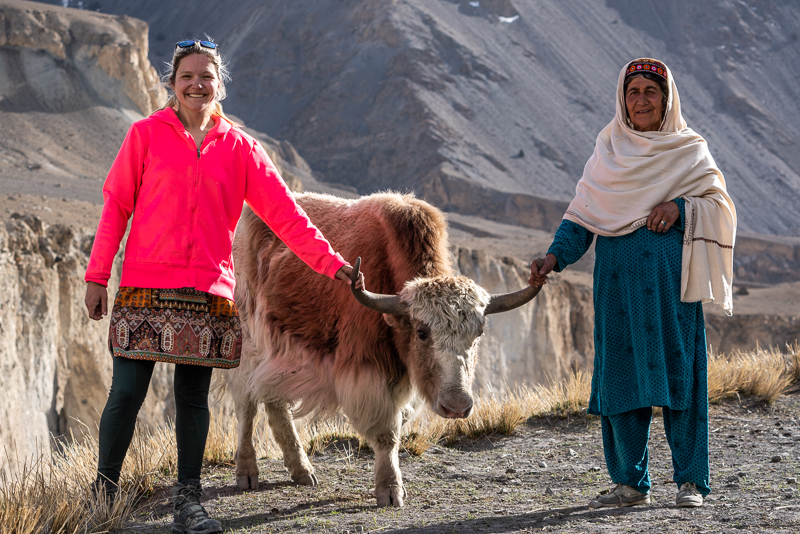
It goes without saying that exploring the country is SIGNIFICANTLY easier for men or couples than solo women. This is a highly patriarchal society after all.
Even so, the country is not all the same and some places are certainly easier to travel as a female than others. I’m not here to sugarcoat: the most notorious locale (with the creepiest men) is by far Punjab. In 2022, an American solo female traveler was gang-raped in the province by guys she knew and trusted.

Now, I know it’s not “all” Punjabi men, but even when you travel to other regions and encounter them as domestic tourists, their behavior is simply the worst. Staring, creepy Facebook/IG messages, selfie requests … all things you may be familiar with if you’ve backpacked India as a woman.
By far the best place for solo female travelers (and where I headed shortly after landing in Islamabad) is Hunza Valley. While I’m not saying the region is completely devoid of “bad apples,” Hunzai men are extremely respectful and civilized. This is in large part due to the fantastic values of the Ismaili sect of Islam that actually allows them to interact with women from childhood.

Regardless of where you trave though, you need to keep in mind that patriarchal values permeate through each and every region of the country. So that means you NEED to be okay with spending most of your time with only men, especially if you want to go out and do/see things.
If you can’t cope with conservative values or commit to wearing more modest clothing than you’re used to, Bali is always open.
Jokes aside, Pakistani culture is VERY different from what you’re used to in the West and you need to accept that. But if you’re willing to, rest assured you’re in for an incredible travel experience unlike any other.
One thing I did that make me feel significantly more comfortable traveling as a woman in Pakistan was take Urdu lessons. My professor Naveed Rehman is as fantastic as they come and has decades of experience. I am now proficient in the language and took my travels to a level I wouldn’t have known was possible otherwise.
Pakistan Travel Insurance
DUH! You shouldn’t travel anywhere without travel insurance and Pakistan is no exception. While it’s not inquired about on the visa, I wouldn’t leave without it.
How to Travel to Pakistan
To enter Pakistan, you can either fly or cross overland. Here’s a quick look at your options:
By air:
Pakistan has international airports in Lahore, Islamabad and Karachi and smaller airports in other cities like Peshawar, Multan and Chitral.

If you choose to fly, I would highly recommend flying into Islamabad as the airport is by far the nicest, least chaotic, and has the most professional staff compared to the others.
By land:
Pakistan can be entered overland from either Afghanistan, China, India, or Iran.

I crossed from India at the Wagah Border and it was ideal- easy, quick, and delicious since both Amritsar (Indian side) and Lahore (Pakistani side) are vibrant foodie cities. I’ve also crossed the Torkham Border that connects Pakistan with Afghanistan twice in 2023 since it became possible to do so.
You can also enter Pakistan from China at the Khunjerab Border, or from Iran at either the Taftan or Rimdan Border.
Getting Around Pakistan
Getting around Pakistan has been pretty easy and straightforward- if I couldn’t figure something out someone was ALWAYS there to help us get to the right bus/ car.

Here’s the lowdown on different methods of backpacker-friendly transport. Internal flights are also an option, and I do recommend them to reach the mountains if you’re only working with a 2 week Pakistan itinerary or something similar.
Things to Know About Visiting Pakistan
A few things to keep in mind before you arrive…

- Get your vaccinations – Typhoid and Hepatitis A are notably present in the cities. You do not want to get caught up with these – and trust me it’s not as simple as avoiding street eats. My husband contracted Hepatitis A from eating a burger from a modern fast food chain called OTTP in Lahore.
- Learn a bit of Urdu – Trust me that it will go a long way!
- Venture off the beaten path – You’ll be met with empty trails and even more hospitality than normal
- Stay in LOCALLY owned guesthouses in Hunza and Skardu – Don’t support billionaires from Punjab. There are plenty of locally owned (and awesome) locales to stay in!
- Bring a power bank – Power outages do happen, especially in the mountains and quality electronics are very hard to find. A solid power bank is one of the most important items in your backpack.
Can unmarried couples go backpacking in Pakistan?
Unmarried couples can definitely travel in Pakistan, though in specific regions it’s best to tell people you’re married, particularly in conservative KPK.

Most foreigners report never being asked for a marriage certificate or any other documents- just pick a story and go with it!
Do I need to be on a tour to travel in Pakistan?
You definitely do NOT need to be on a tour to travel in Pakistan- everything I’ve done has been independent and free from guards and tour guides.

But there are some pretty epic tour companies these days – I run women’s tours to Gilgit Baltistan (that only support and work with indigenous locals) that you’re always welcome to join. Otherwise, just make sure you’re going with an ethical company that has real experience in the region you’ll be visiting.
DO NOT bring a Punjabi guide to Hunza for example – as that’s like bringing a white male from NYC to Hawaii to learn about its land and culture.
Internet Connectivity in Pakistan
Pakistan is pretty dang connected these days- even in Upper Chitral I was able to get 2G to send Whatapps.
Foreigners are only allowed to register their own SIM cards at franchise stores- which can be frustrating and expensive.

Not all SIMs work everywhere- I used a total of 3 SIMs throughout my travels. Here’s an idea of which company works where:
- Lahore: ZONG 4G, Telenor 4G, Jazz 4G
- Islamabad: ZONG 4G, Telenor 4G, Jazz 4G
- Peshawar: ZONG 4G, Telenor 4G, Jazz 4G
- Mingora: ZONG 4G, Telenor 4G
- Kalam: ZONG 3G/4G or Jazz 4G
- Thall: Jazz 4G, Telenor 2G
- Dir: Telenor 4G
- Rumbur (Kalash): Telenor 2G barely
- Chitral: Jazz 4G (best), Telenor 4G
- Mastuj: Good Telenor 2G/Wifi
- Yarkhun Valley: Good enough Telenor 2G
- Phander: SCOM 4G
- Yasin: SCOM 4G in Darkot
- Ishkoman: SCOM 4G/3G
- Gilgit City: SCOM 4G, ZONG 2G, Telenor 2G
- Hunza Valley: SCOM 4G
- Elsewhere in GB: Expect varying speeds of SCOM 3G/2G
Pakistani Culture
Pakistan is not Thailand – well obviously but I’m talking in terms of culture. There are dozens of different ethnic groups living here and over 70 languages are spoken in addition to Urdu.

Punjab and Sindh are nearly identical to India, and the vast majority of people living there fled from present-day India during the 1947-1948 partition which saw the largest mass migration in human history. While they make up the majority of the population, that doesn’t mean they represent all of Pakistan as many Westerners who don’t travel seem to believe.
Khyber Pakhtunkhwa is the home of the Pashtuns, though you’ll find many other ethnic groups as well. Having now visited Afghanistan, I can confirm the two are very similar. This is the most conservative place in the country and where you’ll see the least amount of women, as well as the infamous burqa when out and about.
The exception is Upper Chitral, which is, genetically and culturally, very similar to Gilgit Baltistan. Many people (though not all) are Ismailis, and there are theories that they – like the people of Darkut, Phander, and Hunza – may be descendants of Alexander the Great’s army.

Gilgit Baltistan is actually not even constitutionally a part of Pakistan – as a UN-designated internationally disputed territory, local residents cannot even vote in general elections.
The various groups of people here – Burushos, Wakhis, Shinakis, Baltis, Chilasis – have no genetic relation to the Punjab and Sindh majorities, and when you consider places like Hunza, Darkot, and Phander, there are virtually no cultural similarities between themselves and other parts of Pakistan. Aside from the incredible Upper Chitral that is – which is far more like Gilgit Baltistan than the rest of KPK.
Balochistan is another unique part of the country. Though you can find similarities to Iran’s neighboring Baluchistan and even Oman, Baloch culture and identity is very unique. The dress I’m wearing in the above photo is one of the epic aspects of Baloch culture, you won’t find something like it anywhere else in Pakistan.
So what can you find practically everywhere?

- Hospitality – from the far south to the most remote villages up north, I’ve been met with nothing but extreme hospitality from Pakistanis everywhere.
- Patriarchy – even in the most liberal areas, men are the majority in government offices and out on the streets
- Religion – though there are different sects, Pakistan is a Muslim-majority country which means alcohol is banned (though not impossible to find.)
- Urdu – while every ethnicity has its own other tongue, Urdu is the shared language that unites the country and is definitely worth learning a bit of, even though English is also widespread
- Chai – While the mountain regions prefer to add salt instead of sugar, milk tea is something you WILL find all throughout the country. With the exception of Peshawar, which prefers a delicious green-tea type drink called kahwa.
What to Wear in Pakistan
What to wear in Pakistan differs depending on where exactly you’re traveling.
In Lahore, Karachi, and Islamabad you’ll find some women (and a good amount of men) wearing Western clothing, but even then only in very upper-class circles.
Leggings without a long shirt covering them are a no-go- and don’t even think about shorts (though guys can get away with them in the mountains). You can definitely let loose in places like Hunza or while walking on trails but remember – this isn’t a fashion show and you’re not in a Western City.

I never wear a hijab unless I’m visiting a mosque or traveling in offbeat or highly conservative areas like Swat Valley or Peshawar.
My recommendations? Just buy 3 shalwar khameez: insane comfort, breathability, and all the colors and styles you can choose from for 3000 rupees or less- real talk, just do it because who really wants to wear jeans whilst backpacking? …Not I!
Pakistani Food
Pakistan has some of the most delicious food I’ve ever tasted in my life. From juicy meats and the softest of breads, to unique desserts and excellent snacks, foodies will fall in love with Pakistan on their first day in the country.
I know I certainly did!
While it may seem like a spice fest, you’ll find that food in Hunza Valley and other mountain regions is notably spice-free. There, you’ll find incredibly unique ingredients like apricot oil.

Food is highly varied throughout the country, especially when considering the Northern areas. As such, you’ll always have something new to try. Here are some of my favorite Pakistani dishes:
Karahi: Karahi is a delicious meat dish usually made with chicken or mutton and a generous variety of tomatoes and Desi spices. Lahori Karahi is notably spicy beyond belief, but when I tried the dish in Peshawar and Mingora it was perfect!
BBQ: Pakistanis are masters of the BBQ. From chicken to beef to lamb chops, I swear I’d never tasted meat like this in my life. BBQs are everywhere throughout the country and folks love to grill at home too!
Halwa Puri: If you love bread like me, you’ll love Halwa Puri. The popular breakfast dish consists of bread equivalent to American fried dough dipped in a confectionary blend. Puri can also be combined with chole, which consists of chickpeas in a curry sauce.
Chapli kebab: You can’t visit Pakistan without trying a chapli kebab. This dish resembles a hamburger but is really just ground mutton mixed with spices and fried in oil. Like most meats in Pakistan, Peshawar does this one best!
Biryani: An iconic dish of Pakistan, biryani is a large, flavorful rice dish filled with either mutton or chicken. I’ll be honest with y’all – I HATE biryani. I’d much prefer pulow, but the best biryani I’ve had was a nalli (bone marrow) variety in Karachi.

Kulfi: A frozen ice cream-like dessert on a stick, Kulfi is a divine finish to any Pakistani day of eating!
Daal mash: Oily but delicious lentils made with a very specific type of lentils. This is notably different from Indian daal and tastes delicious paired with naan
Buro Shapik: A unique meal that can only be found in Gilgit Baltistan and Upper Chitral, shapik consists of layers of roti (flatbread) with a creamy cheese-like sauce in between

Haleem: A thick stew that reminds me of the texture of split pea soup due to its consistency. Like most things in Pakistan, haleem is best with naan
Nihari: Lahore is known for its delicious nihari spots, which serve up this slow-cooked meat stew. The meat often uses beef but can contain mutton as well
Saag: Saag is extremely popular in winter, but you can try it throughout the year as well. It’s made from various greens, and paneer (a type of cheese) and is paired with a unique type of roti made from corn!
Paye: This might be the weirdest one on this list, but trust me– it’s delicious. Paye is a juicy goat hoof that’s been simmered in spices until its juicy. Best tried in Lahore!
FAQs on Backpacking in Pakistan
Some things people always ask me about traveling in this wild country…
Final Thoughts on Backpacking Pakistan
Whewwww this must have been the longest post I’ve ever written! I hope this Pakistan travel guide was super useful and you’re now hyped up for an adventure.
Deciding to go backpacking in Pakistan no doubt changed my life forever, and as I type this surrounded by the snowcapped peaks of the Karakoram Mountains, I couldn’t be more dang grateful for taking that leap.
If you have anything to add or have any updates on security matters or recommendations on any hotels, do chime in in the comments. I’m always happy to answer questions!


Samantha is the founder of Intentional Detours. Originally from the USA, she’s been backpacking the world since 2017, and is passionate about slow, adventure travel that puts local communities first. She has visited 19 countries and has been living in the Karakoram Mountains of Asia’s Hunza Valley since 2021. She’s super passionate about helping people get off the beaten path anywhere (on a budget of course), and her travel writing has been published in the likes of BBC Travel, CNBC, Business Insider, and more.


I got so excited about Pakistan! Looks amazing and something different. I mentioned this to my boyfriend and he said “absolutely not!”. I think I still have some convincing to do, lol!
The mountains of the Yarkhun valley have always attracted me since I first read about them. Your guide is very practical so I saved it for the day I will go to Pakistan. Thanks for sharing this interesting post!
I’m so glad it was helpful! Yarkhun was truly the highlight of my trip I’d highly recommend!
Hi Samantha,
Hope you are doing great :-)
This is Tanveer from Karachi Pakistan.
I am writing to say thnx for describing my country in a very lovely manner.
What a beautiful piece of writing covering each and every thing.
Believe me even locals can get benefit of your information.
In fact even spending my 35 years in Pakistan, i never travel that much in my country.
You inspired me a lot and i am planning to go for a two weeks tour, when the corona scene gets over.
Would really appreciate, if this Backpacking Pakistan Travel Guide & Itineraries 2020 may available in PDF so that me and many like me may plan our tour accordingly.
Can you please upload this whole journey in pdf?
May God Bless you!!
Always have wings to fly through the world!!!
Cheers.
Thank you for your authenticity and sincerity.