

Here’s a detailed list of 21 festivals of Pakistan that happen every year. Read on for all you need to know about how, when and where to celebrate!
Want to really get to know Pakistan? Attend a festival! Luckily there are many incredible festivals of Pakistan that take place annually, all with their own features and flavors.
From serious religious processions to events that feel more like parties, Pakistan has got it all- truly!
During the many months I spent backpacking through Pakistan (a country I now live in) I was lucky enough to experience TONS of different Pakistani festivals… and a clear observation I made was that lot goes on in the fall y’all!
But no matter what time of year you find yourself in the country, you’re sure to find some type of celebration to take place in.
Here’s a list of 21 epic festivals of Pakistan… many of which will prove beyond any reasonable doubt that South Asia knows how to party.
21 Epic Festivals of Pakistan
These are the absolute BEST Pakistani festivals to experience, broken down by festival type:

Religious Festivals in Pakistan
Religious festivals make of the majority of Pakistan’s festivities. Let’s dive into them:
Shab-e-Barat
Unlike other national holidays of Pakistan, Shab-e-Barat is considered an optional holiday in terms of going to work. The festival is celebrated on the night between the 14th and 15th of the month of Sha’ban and is regarded as a night when fortunes are decided, and Allah forgives sinners.
The South Asian sweet known as halwa is associated with Shab-e-Barat: families enjoy it amongst each other and donate some to the poor.
When is it?
14th and 15th of the month of Sha’ban
2023: March 7th – March 8th
2024: February 24th – February 25th
2025: February 14th – February 15th
Mela Chiraghan

Translating to the “Festival of Lights,” Mela Chiraghan is a 3-day festival commemorating the death of Shah Hussain, a Sufi saint and poet that lived in Lahore in the 16th century.
The celebration takes places at Madho lal Hussain’s shrine, which is one of my favorite places to visit in Lahore. The zealous event–which is located in the Baghbanpura section of the city–is filled with dhamal (Sufi meditative dance), live music, oil lamps for days, and as is common at Sufi celebrations, hashish.
This Pakistani mela used to be the largest Punjabi festival, but now ranks second. While it used to take place in the famed Shalimar Gardens, it was moved to the shrine in 1958.

Devotees mingling before the dhamal. Those who participate in dhamal do so to the beat of these dhol drums Dhamal vibes at dark


Nevertheless, the Mela is one of the oldest continuing celebrations of the Subcontinent, and the story of Shah Hussain is quite a compelling one.
You see, the shrine is actually named Madho lal Hussain, which fuses the name of Shah himself and his Hindu lover, Madho.
Shah Hussain was a pioneer of Punjabi Kafi poetry, and Madho started off as a follower of his work. Their relationship bloomed despite serious societal taboos, and today the shrine symbolizes unity against all odds.
Personally, I’m a sucker for anything Sufi as the poetry, dhamal, and beautiful shrines are nothing short of enchanting.
So while I might be a bit biased, this festival of Pakistan is truly one you MUST attend… especially if you’re looking to experience something really unique on your Pakistan itinerary!
When is it?
2023: March 24th-March 26th
2024: March 29th – March 31st
2025: March 28th -March 30th
Lal Shahbaz Qalandar Urs


I personally think all Urs celebrations are worth seeing, but the one of Lal Shahbaz Qalandar might be one of the most fantastic in all of Pakistan.
Lal Shahbaz Qalandar is perhaps one of the most popular Sufi saints in South Asia, and his annual Urs mela attracts nearly 1 million pilgrims from all across Pakistan.
Lal Shahbaz Qalandar lived from 1177 to 1274 and was known to preach religious tolerance. In fact, he became both a scholar of religion and a polyglot.
His beautiful shrine- which is located in the town of Sehwan in Sindh province– becomes the annual centerpiece of a town-wide mela.
Dhamal and qawwali are performed in fervor- malangs (wandering Sufi holy men) consider this to be the chief shrine of the Sufi order.
Folk singing and traditional Sindhi wrestling can also be seen throughout the 3-day-festival, which is certainly a unique and rare event that should be on your Pakistan bucket list!
If you do plan to go, you should definitely try to book a hotel several months in advance. Accommodation is very limited in Sehwan, and spots fill up quick!
You don’t want to be stuck without a room in boiling Sindhi temps.
When is it? 18th Sha’aban
2023: March 11th
2024: February 28th
Ramadan
Ramadan is the 9th month of the Islamic calendar and is observed throughout the Islamic Republic of Pakistan.
Fasting is one of the five pillars of Islam, and all able-bodied adults fast of both food and water from sunrise to sunset for the duration of the 30 days.
Aside from food and drink, tobacco must also be refrained from during the month of Ramadan. Pakistani Muslims devote this month to salat (prayer), recitation of the Quran, and the doing of charitable deeds.

Fasting is not for 30 days straight though! During Ramadan, two meals occur each day. Suhoor occurs just before dawn and is followed by the first prayer of the day while Iftar is eaten at sunset.
So you might be wondering what does this mean for travelers? While restaurants and food stalls will be closed during the day, it should still be possible to buy packaged snacks.
Many tourists report friendly folks going out of their way to help them find food, so no need to fear going hungry while traveling in Pakistan during Ramadan!
When is it? The 9th month of the Islamic calendar, the official date of which changes every year
2023: April 24th-May 23rd
2024: April 13th -May 12th
2025: April 2nd-May 1st
Youm-e-Ali
Youm-e-Ali is an important religious holiday in Pakistan, particularly for Shia Muslims. The day commemorates the martyrdom of Hazrat Ali, cousin and son-in-law of Prophet Muhammad.
The day is of utmost importance for Shias as they believe that Hazrat Ali was the rightful, immediate successor to the Prophet.
Like Ashura and Chehlum, Youm-e-Ali is marked by processions of mourning. Mourners cry, beat their chests, and often carry a smaller, symbolic coffin through the streets.
But unlike other religious holidays of Pakistan, keep in mind that Youm-e-Ali is NOT a joyous event.
Nevertheless, observing the procession is sure to be a deeply engaging and unique experience to have whilst in Pakistan. As with other Shia processions, major cities will always be the place to be to really take part.
When is it?
21st Ramadan
2023: April 12th
2024: April 1st
2025: March 21st
Eid-ul-Fitr

Celebrating Eid-ul-Fitr in Pakistan is a must-have experience for anyone who happens the be in the country at the time.
Also known as the “Festival of Breaking the Fast”, Eid-ul-Fitr marks the end of Ramadan and the beginning of the month of Shawwal.
This important and exuberant festival of Pakistan traditionally begins at sunset on the night of the first sighting of the crescent moon and lasts for three days.
After the Eid prayer, families celebrate with communal meals and lots of delicious sweets. It’s also paramount that those celebrating Eid give Zakat, also known as obligatory charity.
As Eid is a festival celebrated all throughout Pakistan, whether you’re in Sindh or traveling in Hunza Valley, you’ll surely find a way to take part!
When is it?
1st of Shawwal
2023: April 21st
2024: April 10th
2025: March 31st
Eid-ul-Azha

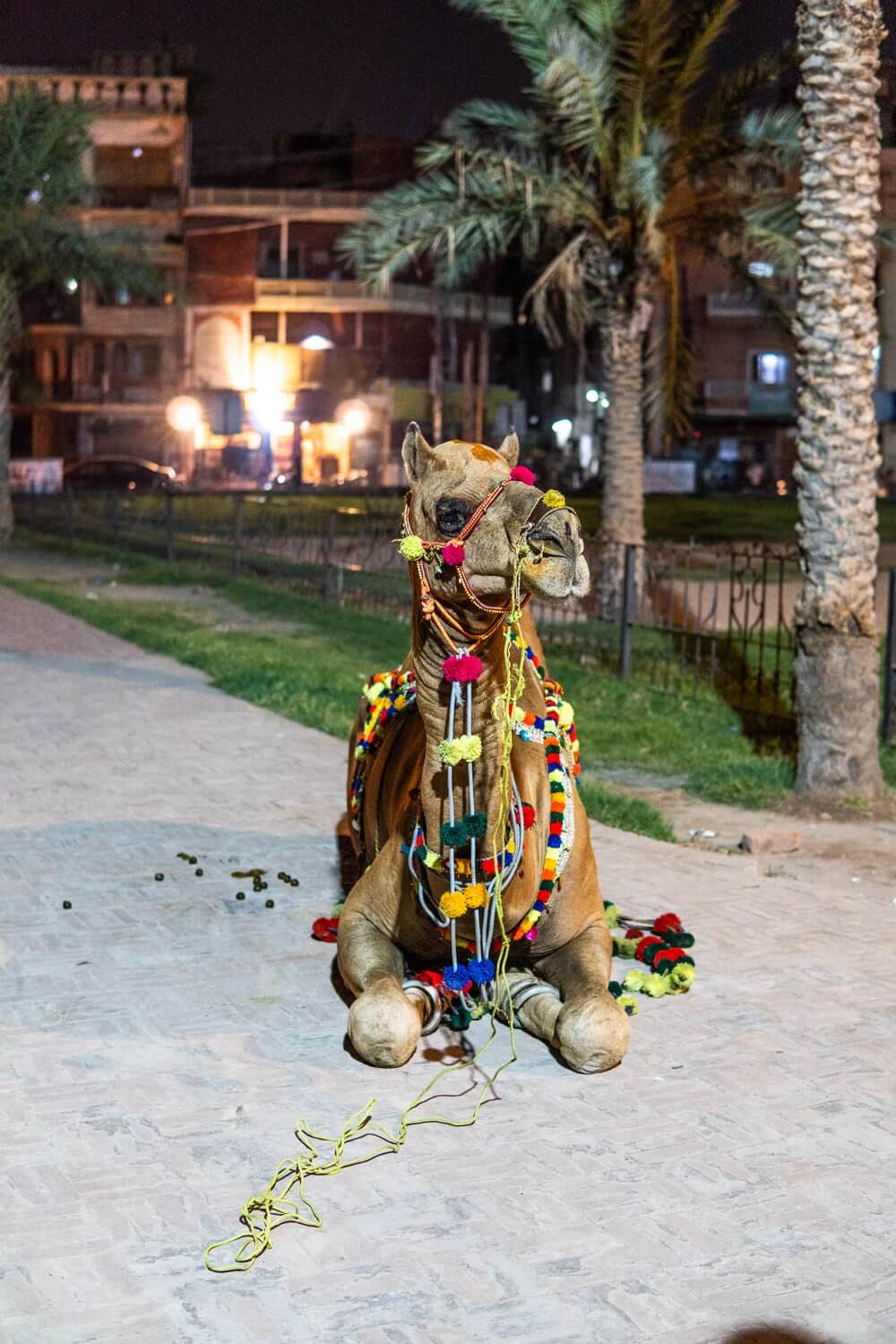
Also known as the Festival of Sacrifice, Eid ul Azha is one of the most important religious festivals in Pakistan.
Eid ul Azha commemorates Ibrahim’s willingness to sacrifice his son at Allah’s command, though in the end, Allah intervened with the provision of a lamb to be sacrificed instead.
As such, the three-day event is marked by the slaughtering of a sheep, cow, goat or in some cases- camel.
If you’re a traveler looking to experience Eid in Pakistan, you won’t have to look far! Pakistanis are incredibly hospitable and from my experience, many families will be happy for you to share in the festivities.
After the slaughter, which usually takes place in the early morning (though can occur later in the day), the meat is divided into thirds: 1/3 is kept at home, 1/3 is given to the poor, and the last 1/3 is shared with friends and relatives.
Though some families raise their sacrificial animal up over the months preceding Eid al Azha, it’s also possible to buy one last minute.
Like other Eids, Eid ul Azha is a multi-day event, with the first two being a public holiday in Pakistan.
Travel Tip: Though Eid ul Azha is celebrated across the country–it’s even something you can see in Hunza Valley–I highly recommend travelers head to Lahore to fully immerse themselves in this unique Pakistani festival!
Make your way to the Walled City before 8:00 AM if you want to see the sacrifices (also known as qurbani) in action.
Real talk: Qurbani meat was some of the best I had in all of Pakistan!
When is it?
Eid ul Azha begins on the 10th day of the month of Dhu al-Hijjah, the 12th month of the Islamic calendar
2023: June 28th- June 29th
2024: June 16th- June 17th
2025: June 6th- June 7th
Read Next: The Best Restaurants in Lahore
Baba Bulleh Shah Urs

Another Urs festival?
You got it- there’s tons of them in Pakistan! Baba Bulleh Shah was a famous Sufi philosopher and poet who lived in the early 1700’s. Like Shah Hussain who lived before him, Bulleh Shah was also known to employ the Kafi verse form in his work.
Aside from his poetry, he emphasized and practiced non-violence, which was especially well-received as he lived in a time of intense fighting between Muslims and Sikhs.
Thus, his popularity stretches across religions and many come to commemorate the anniversary of his death.

The Urs takes place at his shrine in Kasur, a small city in Punjab about an hour from Lahore. Like other Urs fests, you can find yourself amongst glittering lights, qawwali music, and of course: malangs performing dhamal.
When is it?
Last week of August annually, dates TBA
Ashura

Credit: Saeed Husain Rizvi / Shutterstock.com
Ashura takes place from the eve of the 9th of Muharram– a holy month for all Muslims- through the 10th. But what really is this national holiday of Pakistan?

Ashura is a major holiday for all Muslims, though it’s particularly significant for Shia Muslims. Ashura marks the martyrdom of Imam Hussain ibn Ali – grandson of Prophet Muhammad- in the battle of Karbala.
It’s important to note that while Ashura can be classified as a holiday, it is actually a period of intense grief and mourning for Shia Muslims in Pakistan and beyond-unlike some other Pakistani festivals, you won’t find joy here.
In Pakistani cities, large processions take place on Ashura: on the eve of the 9th of Muharram, thousands of mourners flood the streets in organized events where poetry is read, songs are sung, and many men engage in self-mutilation in memoriam of Hussain’s death.
Due to large Shia populations, you can also encounter Ashura processions throughout Gilgit Baltistan, everywhere from Hunza Valley to Gilgit, Skardu, and Astore.
The evening is also marked by the decoration of a white horse called Zulijana. Zulijana represents the horse Imam Hussain rode into battle and such symbolism is a notable part of the procession.
Like many Pakistani holidays, cities are your best bet for really taking in Ashura. Keep in mind that, due to safety precautions, cell service is often shut down in metro areas during the commemorations.
If you do plan to attend, I recommend not heading out alone and to have a meeting spot in case you get lost.
Though security is a bit amped up during Ashura, travelers curious to see an authentic Pakistani cultural event will definitely appreciate the experience.
When is it?
The 9th and 10th of the holy month of Muharram
2023: August 28th – August 29th
2024: August 18th – August 19th
2025: August 7th– August 8th
Chehlum

Chehlum takes place exactly 40 days after Ashura, and the two look very similar in practice. The 40 days comes from the usual length of mourning after death in Muslim tradition.
As with Ashura, Chehlum is marked by large processions in cities, where mourners often carry flags and tabuds– a symbolic coffin of Imam Hussain.

Chehlum takes place in the month of Safar, the second month of the Islamic Calendar- though like most holidays in Pakistan, the official date changes each year.
As a tourist, the same protocols taken to observe Ashura can be used during Chehlum.
When is it?
20-21st Safar
2023: September 6th – September 7th
2024: August 25th – August 26th
2025: August 14th – August 15th
Data Darbar Urs

One of the many religious festivals in Pakistan, the Data Darbar Urs commemorates the death anniversary of Sufi saint Data Ganj Baksh, who is believed to have lived in Pakistan in the 11th century.
His shrine, Data Darbar, is the largest in all of South Asia and is considered to be the most sacred place in Lahore.

Though you can visit the shrine 24/7, attending the Urs ceremony is a whole new experience. Over 1 million devotees come during the 3-day festival, many of which stay overnight on the shrine’s grounds.
Unlike other Sufi shrines, Data Darbar has segregated entrances for men and women, though it’s still possible for women to see his tomb. On the streets that surround the complex, you can see malangs performing dhamal and take a gander at qawwali performances.
When is it?
18th-20th Safar annually
Eid Milad-un-Nabi

Perhaps the most decorative of all the festivals of Pakistan, Eid Milad un Nabi is the observance of the birthday of Prophet Muhammad and is known for being celebrated with millions of lights-literally.

Pakistani cities literally become awash with color as strings of lights and garnishments brighten up buildings and winding streets in the week before the holiday. Fireworks are lit, joyous parades occur, and cakes are baked to celebrate the Prophet’s day of birth.
Celebrating Eid Milad un Nabi is a MUST if you happen to be in Pakistan at the time- we intentionally chose to stay longer just to see it and it was beyond worth it.

Though Eid Milad-un-Nabi is a national holiday of Pakistan, if you really want to see the decorations in their full glory you’ll have to head to a city. I might be biased, but Lahore’s Walled City is THE place to be. It was truly lit- both literally and figuratively!
When is it?
12th Rabi al-awwal
2023: September 27th
2024: September 15th
2025: September 4th
Cultural Festivals of Pakistan
If you’re wondering when the best time to visit Pakistan is, it’s during one of these epic cultural fests!
Basant

Basant is (was) a kite festival in Pakistan marked by the flying of… you guessed it: kites! This historic Punjabi festival celebrates the start of spring, with its traditional “hub” being in central Lahore.
Despite being a tradition since the 19th century, unfortunately, the Basant festival in Lahore is not what it once was.
In 2005, the Pakistani government banned kite manufacturing and flying, and then Basant in 2007 due to increasing injuries from electrocution, dangerous types of kite strings, falls, and more.
Sadly, as of 2022, the celebration has yet to be reinstated– a move that has devastated a once-thriving industry. Today, kite flying remains illegal in Lahore, though many still choose to fly. We can only hope that one of the most beautiful festivals of Pakistan is somehow able to be revived safely.
When was it?
When it was celebrated, Basant typically took place in late January or early February.
Sibi Mela
The Sibi Mela is a Pakistani cultural festival that’s been occurring in Sibi, Baluchistan for several centuries. Today, the festival is known for its animal markets, camel racing, folk dancing, and local handicrafts.
This Pakistani mela usually takes place near the end of February, when temperatures are still manageable in the region. The 5-day event is a prime opportunity to experience the rich culture of Balochistan, and is an important provincial holiday for Balochis.
Though this part of Pakistan is relatively safe, it will be difficult to attend the Sibi Mela as a foreigner as most of Balochistan is restricted.
Though an NOC might be technically required, those can be tricky if not impossible to get. Nevertheless, Pakistanis are free to attend- Sibi is located approximately 3 hours from the Sindhi city of Sukkur and 3 hours from the Balochi capital Quetta.
When is it?
Dates aren’t announced in advance, but the festival usually takes place during the last week of February
Read Next: 16 Incredible Historical Places in Pakistan
Kalash Festivals

The Kalash are a small and very unique ethnic group that resides in the Chitral district of KPK. They have a culture and dress that is very distinct from other Pakistanis and are known for their colorful festivals… and their homemade mulberry wine!
The Kalash have three festivals each year that are open to the public, all of which are interesting events to experience in Pakistan.

Credit: DanPotterPhotos / Shutterstock.com
The festivals are:
Chilam Joshi- Chilam Joshi welcomes spring with hours upon hours of music and dancing. This is the most popular Kalash festivals of Pakistan in terms of tourism.
If you’re looking to attend, be sure to reserve a place to stay well in advance- both foreign and domestic tourists flock to Chilam Joshi these days!
When is it? Always in May, future dates TBA
Uchal- Whereas Chilam Joshi celebrates the coming of spring, Uchal is all about harvest season. Along with traditional Kalash partying, special foods are prepared for this event including cheese, buttermilk and cornbread.
As there are numerous valleys and villages in the Kalash region, this festival moves around a bunch, though you can expect things to start off in the largest valley- Bumburet.
When is it? Always in August, future dates TBA
Choimus- The coldest of all the Kalash festivals of Pakistan, Choimus takes place in December and celebrates Balomain, the heroic demigod of the Kalash. Like the other fests, special food is eaten, and many hours of dancing and singing are performed.
Some say this is the most sacred of all the Kalash festivals, and due to the time of year, it attracts the least amount of tourists. So if you’re looking to see an authentic Pakistani mela- this might be your best bet!
When is it? Always in December, future dates TBA
Shandur Polo Festival

Credit: UmairHaider / Shutterstock.com
Looking to attend one of the epic and famous festivals of Pakistan? Well look no further than the Shandur Polo Fest- which happens to be held at the highest polo ground in the world!
The fest takes place on the Shandur Pass, a beautiful high-mountain pass that connects Khyber Pakhtunkhwa with Gilgit-Baltistan.
At 3700 m, you’ll be able to say you witnessed the world’s highest-altitude games of polo. This historic Pakistani festival has been held annually since 1936 and gives onlookers a chance to see polo played in its rawest form.
Players from Gilgit and Chitral battle it out, while folk music, dancing and camping can also be enjoyed during the 3-day event.
If you do attend, I highly recommend driving through the entirety of stunning Shandur Pass. To really maximize your trip, visiting Phander Valley on the Eastern side of Shandur is definitely worth the drive!
Or you can head further to Yasin Valley, which is home to some of the best treks in Pakistan.
When is it?
Early July, future dates TBA
Broghil Festival

Looking to experience an offbeat festival of Pakistan? Head up to Broghil, an extremely remote valley with incredibly unique traditions.
Broghil Valley is located at the far north of Pakistan’s Chitral District and shares a border with Afghanistan’s peaceful Wakhan Corridor.
Every year, the Broghil Festival- which features epic games of Yak Polo– is beginning to attract more and more visitors.
The fest is held in Ishkarwaz, which can only be reached by Jeep from the small transit town of Mastuj.
A tent village is set up where onlookers can camp and experience traditional Wakhi folk music and dancing.
Though foreigners can visit Yarkhun Valley, getting to Broghil is very hard, but Pakistani citizens shouldn’t have this issue.
When is it?
Late August / Early September. Future dates TBD
National Festivals of Pakistan
The following are national festivals in Pakistan that are celebrated across the country by people of all religions and ethnic groups.
Pakistan Day

While Independence Day celebrates Pakistan’s official independence, Pakistan Day ( also called Republic Day) commemorates the adoption of the Lahore Resolution and the adoption of the first constitution of Pakistan.
The resolution- which passed on March 23, 1940- sought to create a separate homeland for the Muslims of what was then British India whereas the adoption of the first constitution of Pakistan on March 23, 1956 made Pakistan the world’s first Islamic Republic.
The day is considered a national festival of Pakistan and is marked by military parades in large cities and of course, lots of green and white décor!
When is it?
March 23rd annually
Pakistani Independence Day

Pakistan’s Independence Day is an outright party, especially in cities! People celebrate at home, attend parades, join other parades with their own vehicles, and of course: wear lots of green!
In the days and weeks leading up to the event, which celebrates the day on which Pakistan became an independent nation, shops sell all types of items bearing Pakistan’s green and white colors. Cities and towns dazzle with lights and flags of all sizes- it’s truly a sight to see!
If you’re looking to experience this festival of Pakistan in all its glory- head to the city! In Lahore, hordes of motorbikers head through Mall Road, blaring plastic horns and honking the ones on their vehicles.
But even if you can’t make it to a city- you’re sure to experience all the Pakistani pride and excitement no matter where you celebrate from.
When is it?
August 14th annually
Final Thoughts on Pakistan’s Best Festivals
And there you have it- the most extensive list of Pakistani festivals on the internet! I feel incredibly lucky to have attended so many of these, and hope you’ll be able to experience a few.
If you could only attend ONE festival of Pakistan, I’d recommend picking either Mela Chiraghan or the Urs of Lal Shahbaz Qalandar. Both are seriously epic in every sense of the word.
But regardless of which one you pick, it’s sure to be an interesting time–as surprising as it might seem, Pakistan knows how to party!

Samantha is the founder of Intentional Detours. Originally from the USA, she’s been backpacking the world since 2017, and is passionate about slow, adventure travel that puts local communities first. She has visited 19 countries and has been living in the Karakoram Mountains of Asia’s Hunza Valley since 2021. She’s super passionate about helping people get off the beaten path anywhere (on a budget of course), and her travel writing has been published in the likes of BBC Travel, CNBC, Business Insider, and more.


I didn’t know about many of them either but it’s always good to read and learn.